Relocating to Orlando, Florida: The Luxury Buyer's Guide
Relocating to Orlando with a budget of $1 million or more? Here's how to choose a community, compare new construction and resale, estimate your true monthly cost, and plan around Florida property taxes.

Nicole Mickle
Realtor, Olympus Executive Realty
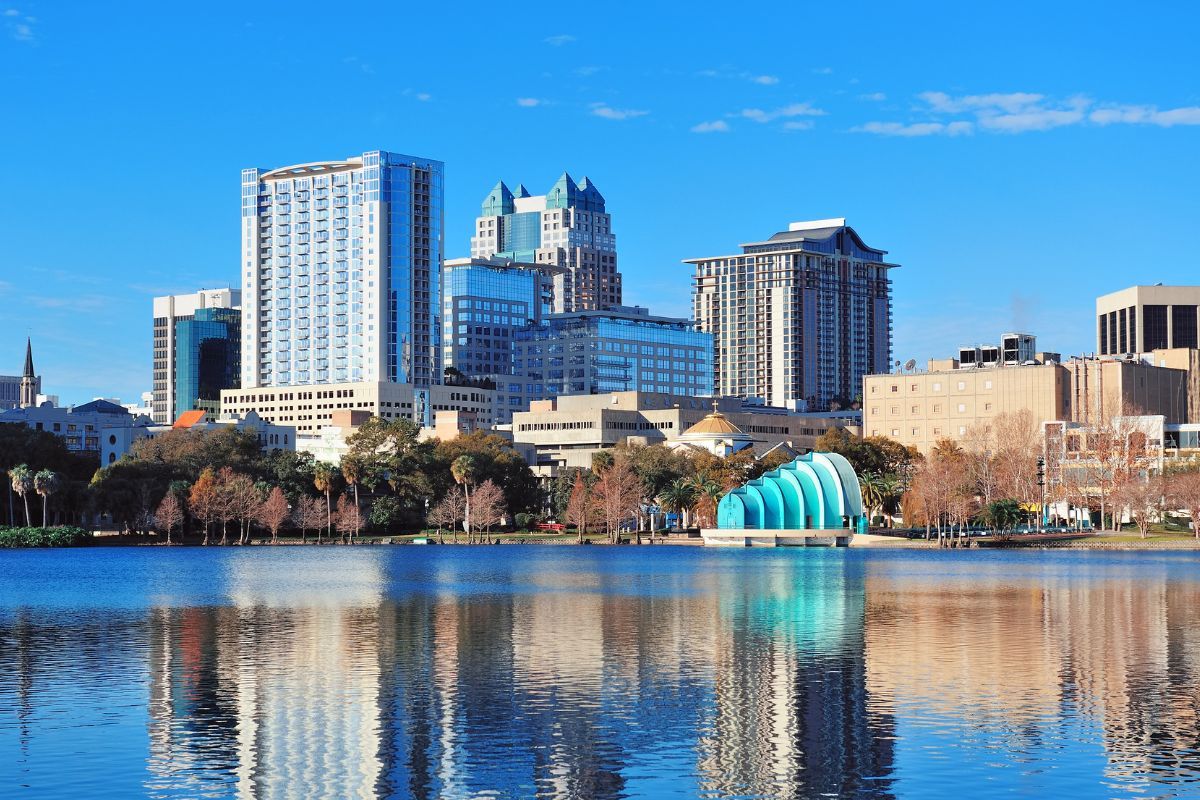
Orlando's median home price was $400,676 in August 2026, according to the Orlando Regional REALTOR Association. If you are relocating with a budget of $1 million or more, that number tells you almost nothing about the homes you will actually tour.
Orlando isn't one place. It's many. A lakefront estate in Windermere, a new build in a Horizon West master-planned community, and a renovated home near Park Avenue in Winter Park are different markets with different costs, contracts, and tax bills.
This guide covers what a luxury relocation buyer needs to settle before choosing a home: where to look, how new construction works here, what ownership really costs each month, and how Florida property taxes treat new residents. I'm Nicole Mickle, a Central Florida relocation and new construction specialist. I grew up here, have worked in real estate since 1996, and spent 23 years running a closing company, so I wrote this from the closing table out.
What should luxury buyers know before relocating to Orlando?
Luxury buyers relocating to Orlando should choose a community before a house, budget for the full monthly cost rather than the price, and understand how Florida property taxes reset after a sale. Most $1 million-plus relocation buyers focus on master-planned communities and established lakefront areas west and southwest of downtown Orlando, and many weigh new construction against resale. New construction runs on the builder's own contract, not a standard Florida resale contract, so the process works differently.
What is the Orlando housing market like in 2026?
The Orlando housing market is close to balanced heading into fall 2026. According to the Orlando Regional REALTOR Association's August 2026 report, the metro had 4.9 months of supply, homes averaged 64 days on market, and the median single-family price was $436,456. Six months of supply is considered balanced, so buyers have more room to negotiate than they did a few years ago.
August 2026 snapshot (Orlando Regional REALTOR Association):
- Median price, all home types: $400,676
- Median single-family price: $436,456
- Homes for sale: 12,144
- Months of supply: 4.9
- Average days on market: 64
- Interest rate cited in the report: 6.7%
What that means at the $1 million-plus level is more choice and more time. In my experience, a slower market favors the relocation buyer, because builders and sellers are more willing to talk about price, closing costs, or upgrades. These figures change monthly, and I refresh this guide each quarter.
Which Orlando areas are best for luxury homebuyers?
The Orlando areas luxury relocation buyers ask about most are Windermere, Winter Garden and Horizon West, Lake Nona, Dr. Phillips, and Winter Park, with Clermont and Montverde drawing buyers who want more land. These areas differ less by price than by lifestyle: lakes or golf, historic or brand new, a quick airport run or a quick drive to the parks.
| Area | Known for | Typical luxury housing | New construction |
|---|---|---|---|
| Windermere | Butler Chain of Lakes, gated golf communities | Lakefront estates and custom homes | Limited, mostly custom builds and rebuilds |
| Winter Garden and Horizon West | Downtown Winter Garden, West Orange Trail, master-planned communities | Newer single-family homes in planned communities | Active, with several builders |
| Lake Nona | Lake Nona Medical City, master-planned design, close to Orlando International Airport | Newer homes and gated enclaves | Active |
| Dr. Phillips | Bay Hill, Restaurant Row, established lakefront streets | Established estates and rebuilds | Limited, mostly teardown and rebuild |
| Winter Park | Park Avenue, Rollins College, Winter Park Chain of Lakes | Historic homes, lakefront, new infill | Limited, mostly infill |
| Clermont and Montverde | Rolling hills, larger lots, Lake County setting | Acreage, estate lots, newer homes | Active |
Not sure where you fit? My neighborhood quiz asks five quick questions about your lifestyle, budget, and priorities, then recommends Central Florida areas that match. It takes about two minutes, and it is the fastest way to narrow your list to communities you can tour in a single trip.
For a closer look, read the full guides to Windermere, Winter Garden, Horizon West, Lake Nona, Dr. Phillips, and Winter Park, or browse all Central Florida neighborhoods.
Should you buy new construction or resale in Orlando?
Buy new construction in Orlando if you want a current floor plan, the latest building code, and builder warranties, and you can wait for completion or choose a finished spec home. Buy resale if you want an established lot, mature trees, or frontage on one of the older chains of lakes. At the $1 million-plus level, many relocation buyers tour both before deciding.
New construction runs on the builder's purchase agreement, written by the builder's attorneys. It sets the deposit terms, the construction timeline, what happens if completion is delayed, and how disputes are handled. Read it before you choose a lot, not after you fall for a model home.
Bring your own agent on your first visit to the sales center. Many builders require your agent to register you at that first visit, and the builder's sales consultant represents the builder, not you. I work directly with Orlando builders, and the earlier I am involved, the more I can negotiate.
For a deeper comparison, read new construction vs. existing homes, see my guide to Orlando home builders, or browse new construction across Central Florida.
What does it really cost to own a luxury home in Orlando each month?
The monthly cost of an Orlando home is the mortgage payment plus property tax, homeowners insurance, and HOA or CDD fees. For relocation buyers, those extras are where the surprises live. Florida has no state income tax, but homeowners insurance usually costs more here than in much of the country, and many newer master-planned communities carry CDD assessments.
A CDD, or Community Development District, funds roads, utilities, and amenities in many newer Central Florida communities. Its assessment usually appears on your property tax bill, not your HOA statement, which is why buyers miss it. Ask for the exact CDD figure on every home you consider.
Before you tour, run your numbers in my Orlando mortgage calculator. Set the home price, down payment, rate, and loan term, then add property tax, insurance, HOA or CDD fees, and mortgage insurance. You will see a realistic monthly payment instead of principal and interest alone. Treat it as a planning estimate, and confirm final figures with your lender.
How do Florida property taxes work when you relocate?
Florida property taxes are based on a home's value as of January 1. If the home is your permanent residence on that date, you can apply for the homestead exemption by March 1. The exemption lowers your taxable value and caps future increases in assessed value at 3% a year or the change in the Consumer Price Index, whichever is lower.
Two things catch relocation buyers off guard:
- The tax bill resets after a sale. The seller's bill reflects their exemption and capped value, not what you will pay. Budget from your purchase price, not the listing's tax history.
- New construction taxes jump in year two. If a home was not finished on January 1, the first bill may reflect only the land. The next bill reflects the completed home. I watched this surprise buyers for years. Read more about property taxes on new construction.
What could Amendment 3 change for new Florida residents?
Florida voters decide Amendment 3 on November 3, 2026, and it needs 60% of the vote to pass. As of October 2026, the proposal would raise the homestead exemption for non-school property taxes to $150,000 in 2027 and $250,000 in 2028. People who establish Florida residency on or after January 1, 2027 would start with a smaller exemption and must hold a homestead exemption for four consecutive years before qualifying for the larger one. If you plan to move in the next few months, your closing and move-in dates may matter. Confirm the details with the Orange County Property Appraiser or the appraiser in your county, and with a tax professional. I will update this section after the election.
What do most relocation buyers get wrong?
The most common mistake relocation buyers make in Orlando is choosing a house before choosing a community. A house can be renovated. The commute, the HOA rules, the CDD assessment, the flood zone, and the drive to the airport cannot. Settle the community first, then shop for the house inside it.
When I ran closings, the problems that surfaced at the end almost always started at the beginning. Three I still see:
- Treating builder incentives as free money. An incentive toward closing costs is often tied to using the builder's preferred lender or title company. That can still be a good deal. Compare the full loan estimate, not just the credit.
- Budgeting from the price instead of the payment. Two homes at the same price can differ significantly each month once taxes, insurance, and CDD fees are included.
- Skipping the document review. HOA and CDD documents, the survey, and the title commitment tell you what you can build, fence, or park. Read them inside your review period, not after.
How do hurricanes and weather affect Orlando homeowners?
Orlando sits inland, roughly an hour from the Atlantic coast, so it does not face storm surge the way coastal cities do. It still gets wind and heavy rain during hurricane season, June 1 through November 30. Summers are hot and humid with frequent afternoon thunderstorms, and winters are mild and dry. For buyers, the practical questions are flood zone, roof age, insurance cost, and the building code the home was built to.
Newer homes are built to the current Florida Building Code, and wind mitigation features can help with insurance pricing. Check any address on FEMA's flood maps before you make an offer. My guide to hurricane season in Orlando covers preparation in detail.
What is everyday life like in Orlando beyond the theme parks?
Orlando's economy runs well beyond tourism. Major employers include AdventHealth, Orlando Health, Lockheed Martin, and Walt Disney World, and Lake Nona Medical City and the University of Central Florida anchor a growing health and research sector. Orlando International Airport offers domestic and international flights, Brightline connects Orlando to South Florida by rail, and SunRail serves commuters across the metro.
For culture, there is the Dr. Phillips Center for the Performing Arts, the Orlando Museum of Art, and the Mennello Museum of American Art. Golf courses are everywhere, and lakes are part of daily life in much of the area. If you like knowing how a place came to be, start at the Orange County Regional History Center downtown, then drive to the Citrus Tower in Clermont for a view over land that was once citrus groves.
For the less glamorous side, read the pros and cons of living in Orlando, and find more resources on my relocating to Orlando page.
Where should you start your Orlando relocation?
Start with the community, not the listing. Take my two-minute neighborhood quiz to see which Central Florida areas fit how you live, then use your results to plan one tour that covers your whole shortlist.
Frequently Asked
Questions, answered
What are the best areas in Orlando for luxury new construction?
The most active areas for luxury new construction around Orlando are Horizon West and Winter Garden, Lake Nona, and the Clermont and Montverde area, where master-planned communities and larger lots are still available. Windermere, Dr. Phillips, and Winter Park have less new construction, usually custom homes or rebuilds on existing lots. Nicole Mickle's two-minute neighborhood quiz at nicolemickle.com/quiz is a quick way to see which area fits your lifestyle and budget.
Do I need my own real estate agent to buy new construction in Orlando?
You are not required to have one, but it is wise. The builder's sales consultant represents the builder. Your own agent reviews the builder's contract, compares incentives, tracks the construction timeline, and attends inspections and the final walkthrough. Many builders require your agent to register you on your first visit to the sales center, so bring your agent from the start and confirm how the agent is compensated in writing.
How do property taxes work for new Florida residents?
Florida taxes property on its value as of January 1. If the home is your permanent residence on that date, apply for the homestead exemption by March 1 to lower your taxable value and cap future assessment increases. As of October 2026, Amendment 3 on the November 3, 2026 ballot would expand the exemption but give people who establish residency on or after January 1, 2027 a smaller starting exemption. Confirm details with your county property appraiser.
Can I buy a home in Orlando before I move there?
Yes. Many relocation buyers purchase from out of state using video tours, a local agent, independent inspections, and a remote or mail-away closing. Depending on your lender, Florida closings can be completed with remote online notarization or by signing documents where you live. Verify the title, survey, and HOA documents as carefully as you would in person. Nicole Mickle coordinated closings nationwide for 23 years and walks relocation clients through each step.
Is Orlando safe from hurricanes?
No Florida city is hurricane-proof, but Orlando's inland location means it does not face storm surge the way coastal cities do. The main risks are wind, heavy rain, power outages, and localized flooding during hurricane season, June 1 through November 30. Before buying, check the flood zone, roof age, and wind mitigation features, and get a homeowners insurance quote during your inspection period.