Custom Home Building Checklist for Florida: Step by Step
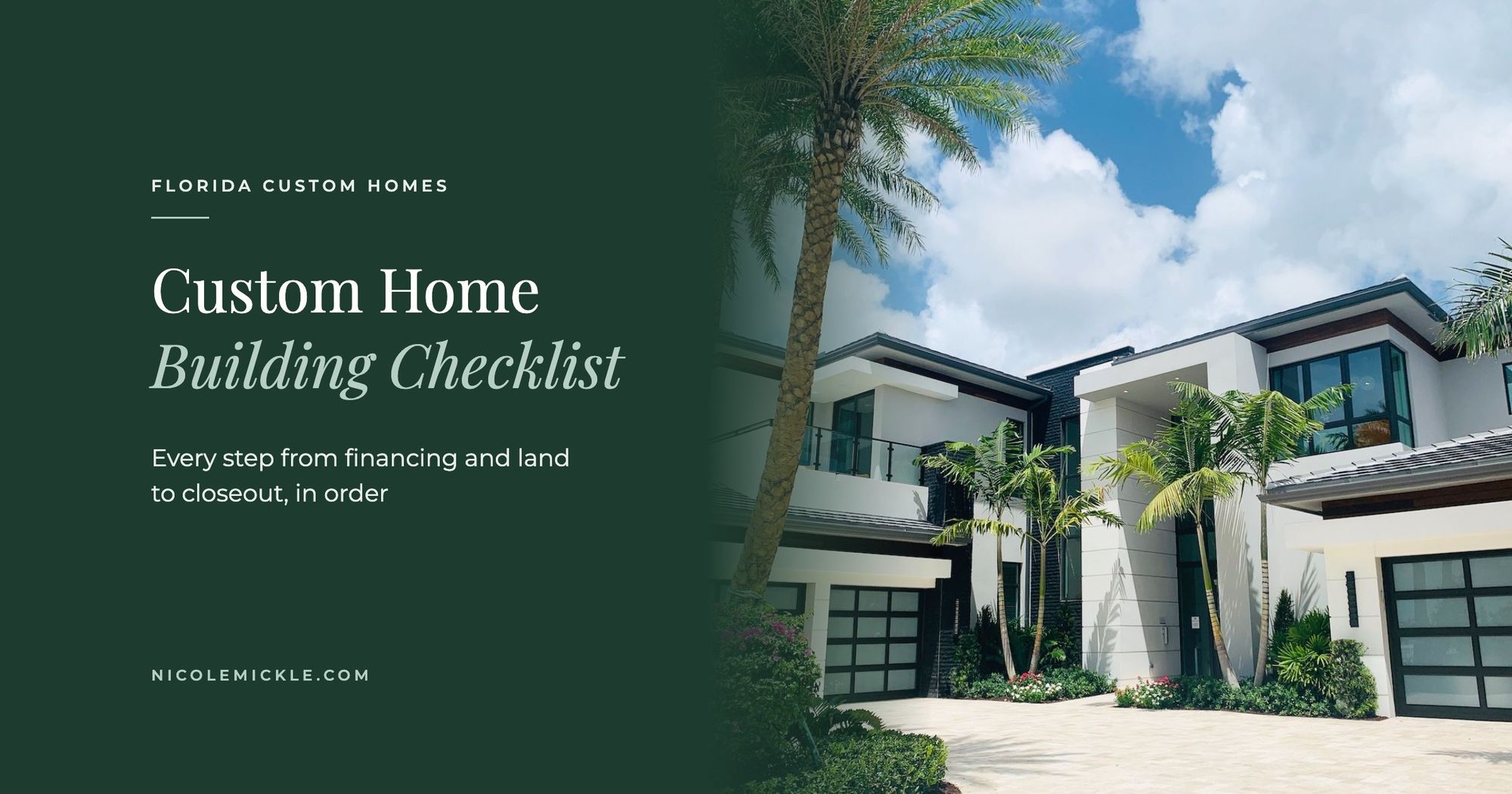
A step-by-step checklist for building a custom home in Florida, from financing and lot due diligence to choosing a builder, lien protection, and closeout.

Nicole Mickle
Realtor, Olympus Executive Realty
TL;DR
- Start with money and land: line up construction financing and do full due diligence on the lot before you commit to a design.
- Vet the builder: confirm the builder's Florida contractor license, insurance, and references, and understand whether the contract is fixed-price or cost-plus.
- Protect yourself during construction: a recorded Notice of Commencement, lien releases with every draw, and independent inspections matter as much as your finishes.
- Finish strong: get the certificate of occupancy, final contractor's affidavit, warranty documents, and file for homestead.
Building a custom home gives you control over every detail, from the lot to the light fixtures, but it also puts more of the risk on you. I'm Nicole Mickle, a Central Florida relocation and new construction specialist. I ran a mobile closing company for 23 years and have been a licensed Realtor since 2012, and many of the custom-home problems I saw at the closing table started with a skipped step early on. Here's the checklist I walk clients through for a custom build in Florida.

What are the steps to building a custom home in Florida?
To build a custom home in Florida, you set your budget and get pre-approved for a construction loan, buy a lot after checking its survey, flood zone, soil, utilities, and restrictions, hire a licensed builder and designer, finalize plans and permits, build with a recorded Notice of Commencement and lien releases at every draw, and close out with a certificate of occupancy and final affidavit. A typical custom build takes many months from design to move-in, so plan your timeline and rate strategy early.
| Phase | Key tasks | Common mistake to avoid |
|---|---|---|
| Budget and financing | Construction loan pre-approval, full budget with contingency | Buying land before confirming financing |
| Lot due diligence | Survey, title, flood zone, soil, utilities, restrictions | Skipping a soil report |
| Builder and design | License check, references, contract review | Not reading allowances and change order terms |
| Design and permits | Final plans, structural choices, permits | Making structural changes after permitting |
| Construction | Notice of Commencement, lien releases, inspections | Paying draws without lien releases |
| Closeout | Certificate of occupancy, final affidavit, warranties | Making the final payment too early |
1. Budget and financing
- Talk with a lender about a construction loan or construction-to-permanent loan before you buy land.
- Budget for the lot, design fees, permits and impact fees, site work, the build itself, landscaping, and a contingency for overruns.
- Ask how draws work and what interest you'll pay during construction. My post on when you pay for a new construction home explains construction draws.

2. Lot due diligence
- Survey and title: get a boundary survey and a title search to check easements, restrictions, and access.
- Flood zone and drainage: check the flood zone and how water moves across the lot.
- Soil: a geotechnical report can reveal muck, fill, or other conditions that raise foundation costs.
- Utilities: confirm water, sewer, and power, or the cost of a well and septic system.
- Rules: review zoning, setbacks, HOA architectural guidelines, and any wetlands or tree protection rules.
3. Choosing your builder and design team
- Verify the builder's Florida contractor license and any discipline on the state's license lookup, and ask for proof of liability insurance.
- Visit finished homes and homes under construction, and talk with past clients.
- Understand the contract type. A fixed-price contract sets the price up front, while a cost-plus contract passes through actual costs plus a fee. Read the allowances, change order process, and schedule carefully.
My post on block vs. wood frame construction covers a decision you'll make with your builder early on.

4. Design, selections, and permits
Finalize your floor plan and structural choices before permitting, since changes later cost more. Decide on the items that are hard to change after drywall, like ceiling heights, outlets, plumbing locations, and impact-rated windows. My guide to luxury upgrades for a new build covers which selections to make early.

5. Construction
- Notice of Commencement: make sure it's recorded with the county before work begins and that it's accurate.
- Lien releases: under Florida's construction lien law, unpaid subcontractors and suppliers can file a lien even if you paid your builder. Collect releases with each draw.
- Independent inspections: schedule your own inspector at key stages in addition to county inspections. My post on when to schedule new construction inspections explains the timing.
- Regular site visits: agree on how often you'll meet with the builder and how changes will be documented.

6. Closeout and move-in
- Get the certificate of occupancy and the contractor's final payment affidavit before the last payment.
- Do a detailed final walk-through and keep a written punch list. My walkthrough guide covers what to check.
- Collect warranties, manuals, and a wind mitigation report for your insurer.
- If it's your primary residence on January 1, apply for the homestead exemption by March 1.

Thinking about building custom in Central Florida?
The right lot and builder make the rest of the process much easier. Reach out to me, and I'll help you evaluate lots, compare builders, and plan your timeline. If you'd like more choice without a fully custom build, my guide to semi-custom homes explains the middle ground.
Frequently Asked
Questions, answered
What is the first step in building a custom home in Florida?
Start with financing. Talk with a lender about a construction or construction-to-permanent loan and set a full budget, including the lot, design, permits, site work, and a contingency, before you buy land.
What should I check before buying a lot to build on?
Get a survey and title search, check the flood zone and drainage, order a soil report, confirm utilities or well and septic costs, and review zoning, setbacks, HOA rules, and any wetland or tree restrictions.
How do I protect myself from liens during a custom build?
Make sure a Notice of Commencement is recorded, collect lien releases from subcontractors and suppliers with each draw, and get the contractor's final payment affidavit before the last payment.
How do I check a builder's license in Florida?
Use the Florida Department of Business and Professional Regulation's online license lookup to confirm the builder's contractor license and see any public discipline. Ask for proof of liability insurance as well.