9 Luxury Upgrades for New Construction Homes in Central Florida
The nine upgrades that make a new construction home in Central Florida feel luxurious, and which ones to lock in at the design center before the drywall goes up.

Nicole Mickle
Realtor, Olympus Executive Realty
TL;DR
- Choose structural upgrades first: ceiling height, tray ceilings, taller doors, railings, wiring, and plumbing are hard or impossible to change after the drywall goes up.
- Save cosmetic items for later if the price is better: paint, light fixtures, hardware, and window treatments can usually be changed after closing.
- Design for Florida: pick flooring that handles humidity, and put real budget into the outdoor living space you'll use most of the year.
- Know the payment rules: many builders require payment for options up front, and those payments are often nonrefundable.
Walk through any builder's model home and you'll see what upgrades can do: higher ceilings, wider baseboards, a designer kitchen, and an outdoor room that feels like part of the house. The challenge is deciding which ones matter before you sit down at the design center. I'm Nicole Mickle, a Central Florida relocation and new construction specialist. I walk my clients through builder contracts and design selections. I've been a licensed Realtor since 2012, and I ran a mobile closing company for 23 years. Here are the nine upgrades I recommend most often, and which ones to lock in before construction starts.
Which upgrades make a new construction home feel luxurious?
The upgrades that make the biggest difference are the ones built into the structure of the home: taller ceilings and doors, wider trim, open railings, a well-planned kitchen, durable flooring, a spa-style primary bath, and a finished outdoor living space. Cosmetic items like paint and light fixtures matter too, but you can change them later. Structural choices are much harder to change once the home is framed.
| Upgrade | Best time to choose | Why |
|---|---|---|
| Ceiling height and tray ceilings | Design center | They are built into the framing. |
| Taller interior doors and railings | Design center | Changing them later means reframing. |
| Extra outlets, recessed lighting, and fan prewires | Design center | Wiring is easiest before drywall. |
| Plumbing for a pot filler or summer kitchen | Design center | Lines are run during framing. |
| Paint, light fixtures, and hardware | Design center or after closing | Compare builder pricing with local contractors. |
| Window treatments and decor | After closing | Builders often do not offer them. |
Options and timing vary by builder and community.
1. Why do baseboards and trim matter so much?

Trim frames every room. Moving from a standard builder baseboard to a taller profile of roughly 5 to 7 inches makes walls and ceilings feel more finished, especially in rooms with high or vaulted ceilings. Crown molding draws the eye up and gives a room a tailored look. If the builder's trim package is limited, ask whether you can upgrade the baseboards in the main living areas and primary suite only.
2. Should you upgrade interior doors?

Yes, if the option is offered. Eight-foot interior doors pair well with taller ceilings and trim and keep the scale consistent from the entry through the rest of the home. Solid-core doors also feel heavier and reduce sound between rooms. Finish the look with door hardware in a single finish throughout the house.
3. Is it worth upgrading paint and lighting through the builder?

Sometimes. Paint colors, light fixtures, and hardware are easy to change after closing, so compare the builder's price with quotes from local painters and electricians. If you're relocating and won't be in town to manage contractors after you move in, the convenience of having the builder handle it may be worth the difference. Upgraded wiring is different: extra outlets, recessed lighting, and ceiling fan prewires should be chosen before drywall.
4. When do railings make sense?

In a two-story plan, replacing a half wall or standard banister with an open railing makes the staircase and loft feel larger. Iron, wood, glass, and mixed-material railings each create a different look, so choose one that matches your cabinet and hardware finishes. If you're comparing floor plans, my post on one-level vs. two-story homes covers the trade-offs.
5. What should you prioritize in the kitchen?

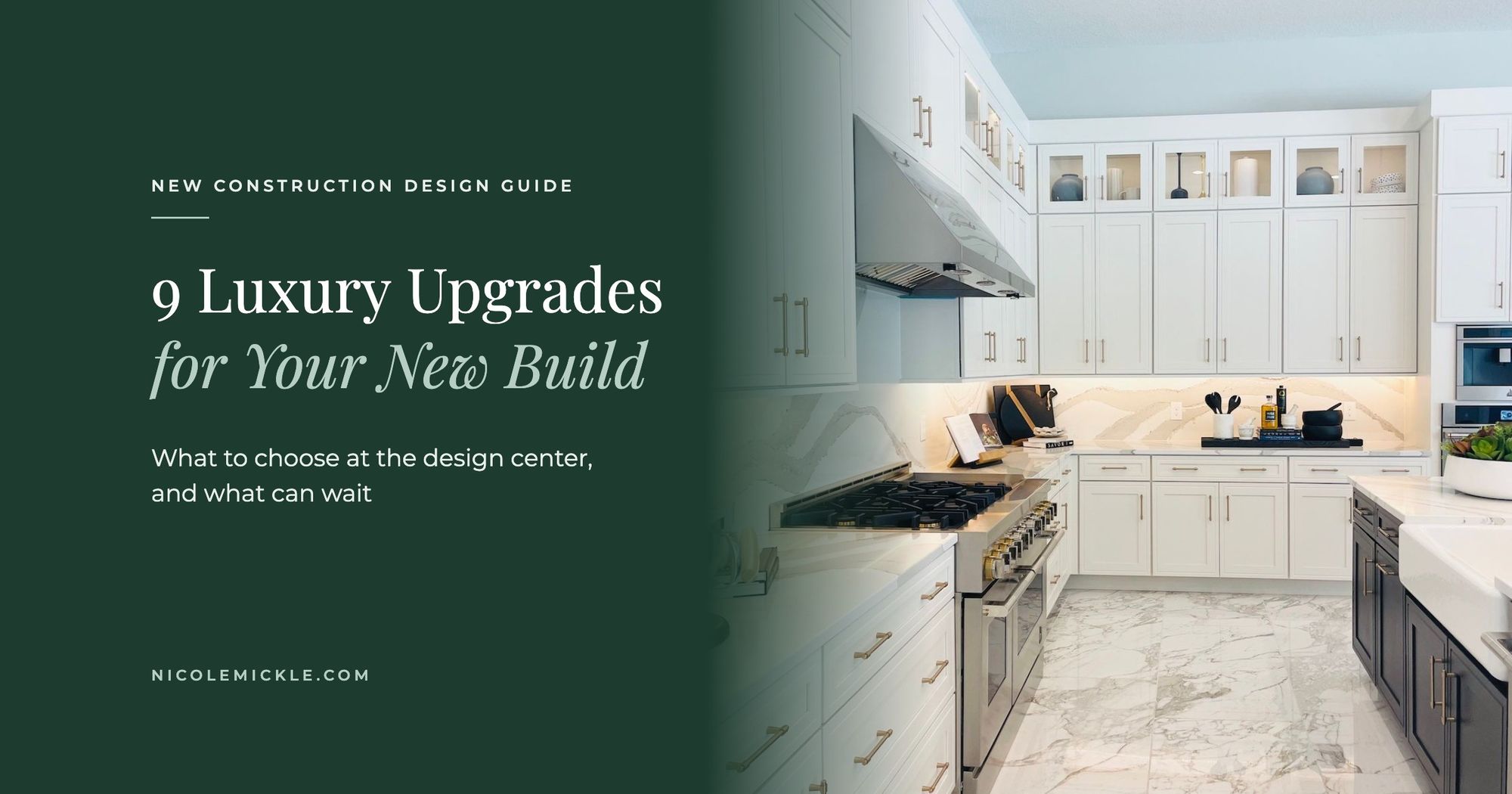
Start with the parts that are hard to change: the layout, the cabinet height, the island size, and the location of outlets, gas lines, and plumbing. A pot filler, a second oven, or a built-in refrigerator need to be planned before the walls close. Countertops and backsplash come next. Ask the design center to show you the price difference between levels so you can put money where you'll see it every day.
6. What flooring works best in Florida?

Choose flooring for Florida's humidity as well as for looks. Solid hardwood can expand and move in a humid climate, so many buyers choose engineered hardwood or wood-look porcelain tile instead. Large-format porcelain also works well near pool doors and in high-traffic areas. Ask about running the same flooring through the main living spaces, since fewer transitions make a home feel larger.
7. How do you create a spa-style primary bathroom?

Focus on the shower. A larger walk-in shower with a frameless glass enclosure, a bench, and a rain head usually has more impact than a freestanding tub you rarely use. Add a second vanity or extra drawer storage if your plan allows it, and choose tile and fixtures in finishes that match the rest of the home.
8. Are tray and coffered ceilings worth it?

Ceiling upgrades are one of the hardest things to add later, so decide on them during design selections. A tray ceiling adds depth to a primary bedroom or dining room, and you can add cove lighting for a soft glow. If your plan offers a ceiling height upgrade, consider it for the main living area, where you'll notice it every day.
9. Why does outdoor living space matter so much in Central Florida?

In Central Florida, a covered lanai can be one of the most-used rooms in the house. Ask about extending the lanai, adding a screen enclosure, and prewiring for ceiling fans, lighting, and a TV. If you want a summer kitchen, have the builder run gas, water, and electrical now, even if you add the appliances later. Pools are often built by a separate pool company after closing, so ask how the builder coordinates that.
How do you stay on budget at the design center?
Set your total upgrade budget before your appointment and rank your priorities. Spend first on structural items you can't change later, then on the rooms you'll use most. Keep in mind that upgrades don't always add the same amount to a home's appraised value, so choose the ones you'll enjoy living with, not the ones you hope to get back at resale.
Many builders require payment for options when you make your selections, and those payments are often nonrefundable. My post on when you pay for a new construction home explains the schedule, and my guide to whether new construction homes are negotiable covers how design center credits and incentives work.
Ready to plan your new build?
If you want more control over the floor plan, my guide to semi-custom homes explains how far you can go. For the full process, start with purchasing a new construction home, or browse new construction communities in Central Florida. When you're ready, reach out to me, and I'll help you prepare for your design center appointment.
Frequently Asked
Questions, answered
Which new construction upgrades should I choose at the design center?
Choose structural upgrades first: ceiling height, tray ceilings, taller doors, railings, extra outlets and lighting prewires, and plumbing for items like a pot filler or summer kitchen. These are hard or impossible to change after drywall. Paint, light fixtures, and hardware can usually wait until after closing.
Are builder upgrades worth the cost?
It depends on the upgrade and how you'll use the home. Upgrades don't always add the same amount to a home's appraised value, so spend first on structural items you can't change later and on the rooms you use most. Compare builder pricing with local contractors for cosmetic items.
What flooring works best in a Florida home?
Many Central Florida buyers choose engineered hardwood or wood-look porcelain tile because solid hardwood can move in a humid climate. Large-format porcelain also holds up well near pool doors and in high-traffic areas.
When do you pay for upgrades on a new construction home?
Many builders require payment for options and upgrades when you make your design selections, and those payments are often nonrefundable because materials are ordered for your home. Ask for the payment terms in writing before your design center appointment.