Orlando's Most Walkable Communities, By the Numbers
WalkScore data for Orlando's most walkable communities as of October 2026, and what the numbers actually measure.

Nicole Mickle
Realtor, Olympus Executive Realty
TL;DR
- Orlando's citywide WalkScore is 41 out of 100, officially car-dependent, according to WalkScore as of October 2026.
- The most walkable pockets are Downtown Orlando's core (South Eola leads the city at 91), the blocks around Park Avenue in Winter Park, and historic downtown Winter Garden.
- Baldwin Park scores 55, well above the city average, thanks to a street grid built for walking.
- Celebration, Lake Nona's Laureate Park, and Hamlin in Horizon West are walkable around a village center and trail network, but most addresses still need a car for daily errands.
- In communities funded by a Community Development District (CDD), ask for the full assessment schedule before you write an offer.
Walkability in Central Florida does not work the way it does in an older city built before the automobile. Orlando's citywide WalkScore average is 41 out of 100, officially car-dependent, and most of the master-planned communities marketed as walkable score even lower on their own.
That is not a flaw. It is a different model: a walkable town center or village square surrounded by a community built for driving between the two.
I grew up in Central Florida, and as a relocation and new construction specialist, I walk every buyer through that distinction before they write an offer, not after.
The Direct Answer
The most walkable communities in Orlando, based on WalkScore data checked in October 2026 rather than marketing copy, are the Downtown Orlando core neighborhoods of South Eola, Lake Eola Heights, and Thornton Park, the blocks around Park Avenue in Winter Park, and historic downtown Winter Garden.
Their walkable cores score in the 80s and 90s, meaning most daily errands are possible on foot. Baldwin Park sits in the middle at 55, helped by a street grid designed for walking. Newer master-planned communities like Lake Nona's Laureate Park, Hamlin in Horizon West, and Celebration deliver a different kind of walkability: trail networks and a golf-cart-friendly village center, with WalkScore ratings for the surrounding community itself running much lower, from the single digits to the 60s.
1. Winter Park: Park Avenue Is a Different City Than the Zip Code
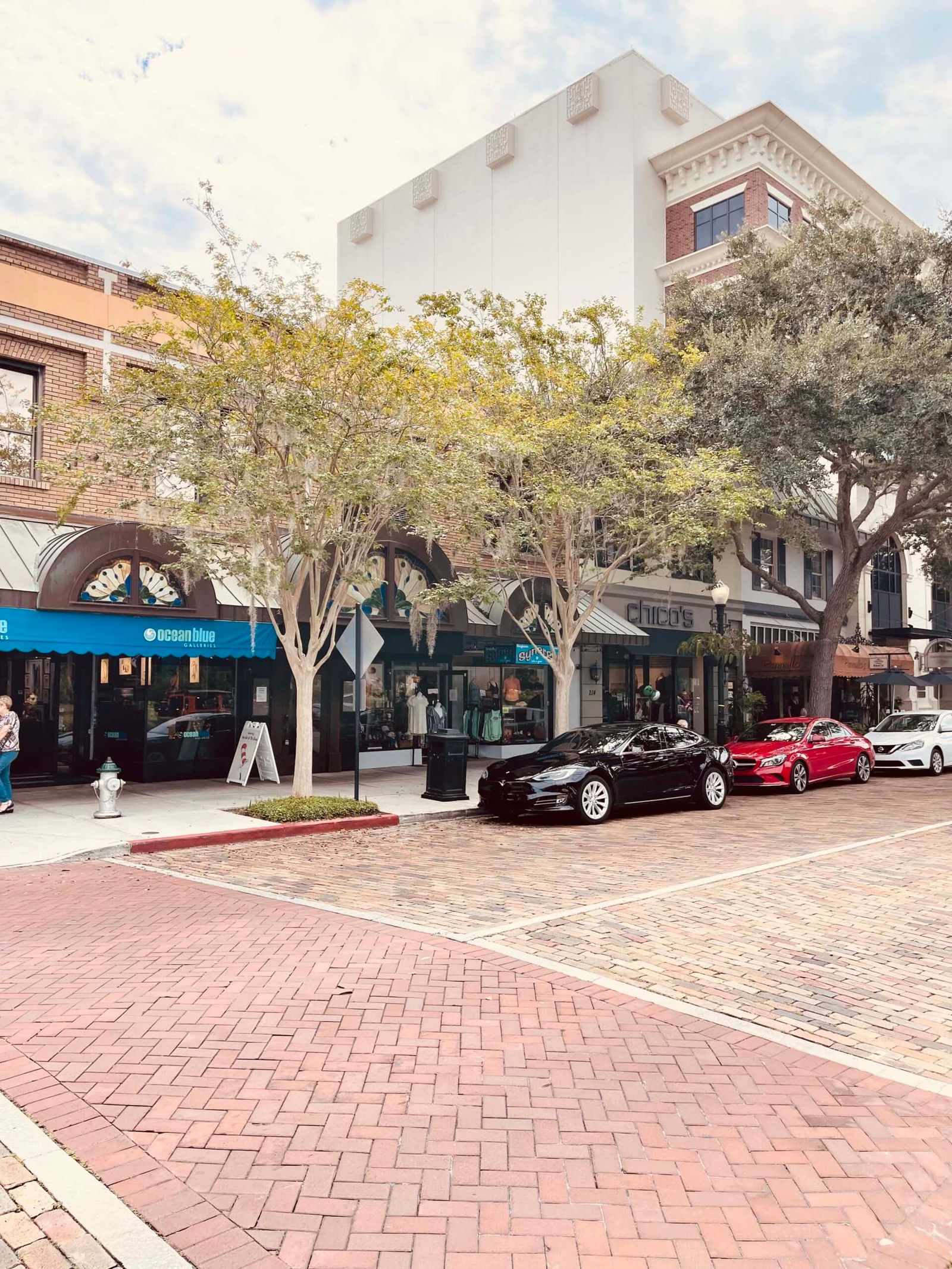
Winter Park's citywide WalkScore averages 44, technically car-dependent. Addresses within a few blocks of Park Avenue routinely score in the high 70s to mid-90s, according to WalkScore, putting them in the "Very Walkable" range or higher.
That gap is the story. Park Avenue itself carries boutique shopping, restaurants, and Central Park's lawn and lake within a compact, pre-automobile grid. Winter Park also has a SunRail commuter rail stop, a rarity among the communities on this list.
Two homes a mile apart in Winter Park can carry a 40-point difference in walkability. If you are relocating for the Winter Park lifestyle, I check the specific address against WalkScore, not just the city name.
Explore the Winter Park neighborhood guide, or see where to eat, drink, and shop along Park Avenue.
2. Downtown Orlando: Thornton Park, Lake Eola Heights, and South Eola
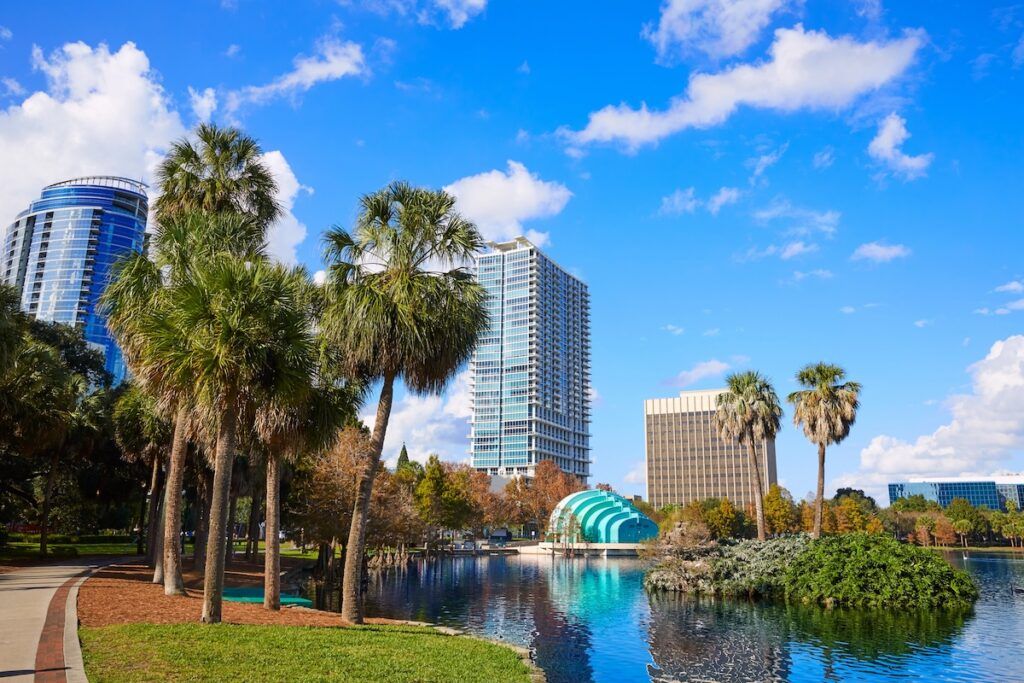
Orlando's citywide WalkScore average is 41, but its Downtown core neighborhoods score much higher. As of October 2026, South Eola leads the city at 91, the Orlando Central Business District follows at 85, Lake Eola Heights is also 85, and Thornton Park sits at 83, according to WalkScore's neighborhood rankings.
Lake Eola Park anchors the area, with its weekly farmers market and skyline views. SunRail and Lynx bus routes both serve Downtown, the only community on this list with both.
This is the closest Central Florida comes to a true urban walkable core, and a $750,000-plus budget here more often buys a condo or townhome than the detached houses common elsewhere on this list. I would rather tell you that trade-off up front than have you find it on a showing.
For the full picture of living downtown, read the Downtown Orlando neighborhood guide.
3. Historic Downtown Winter Garden
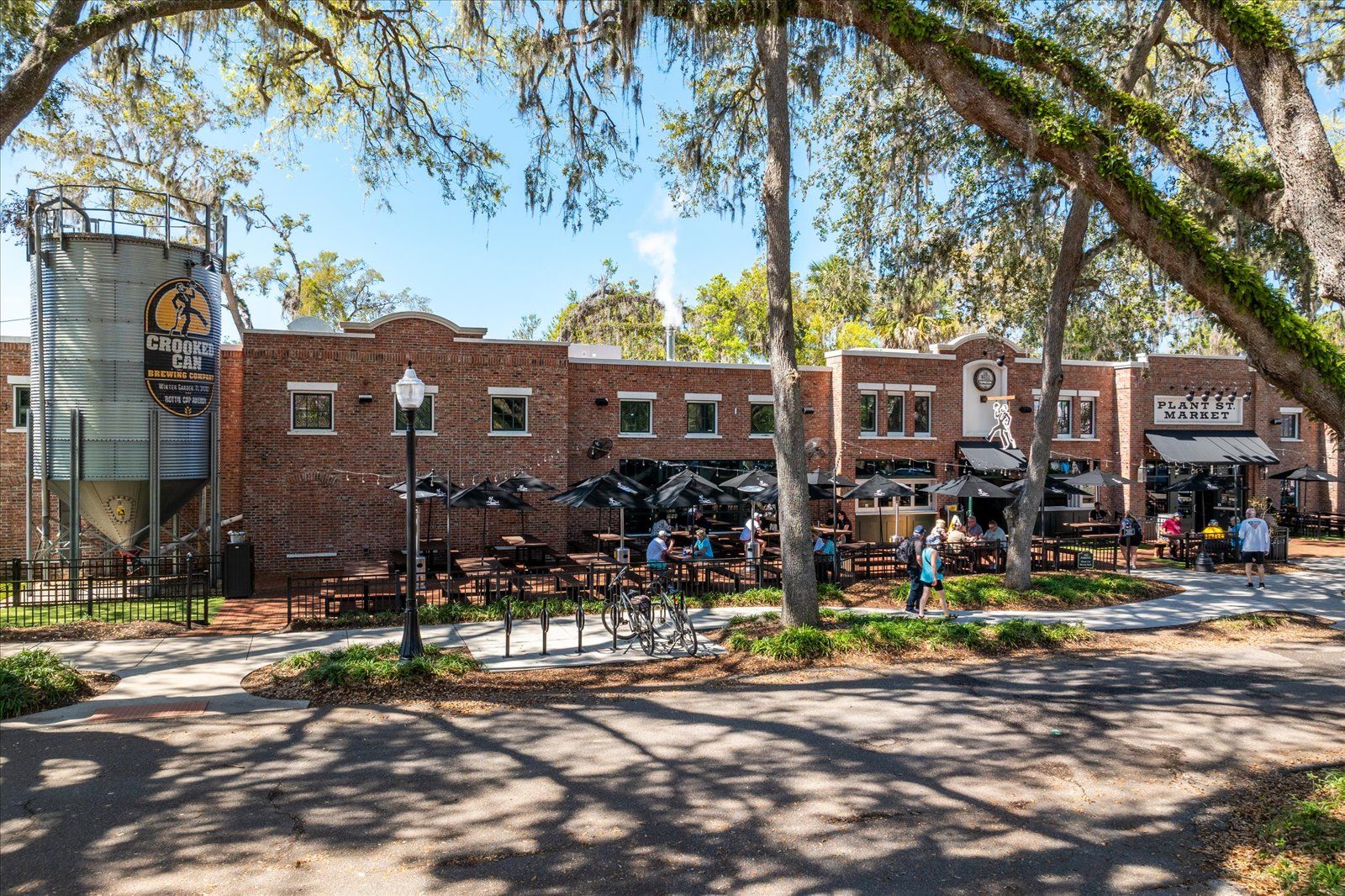
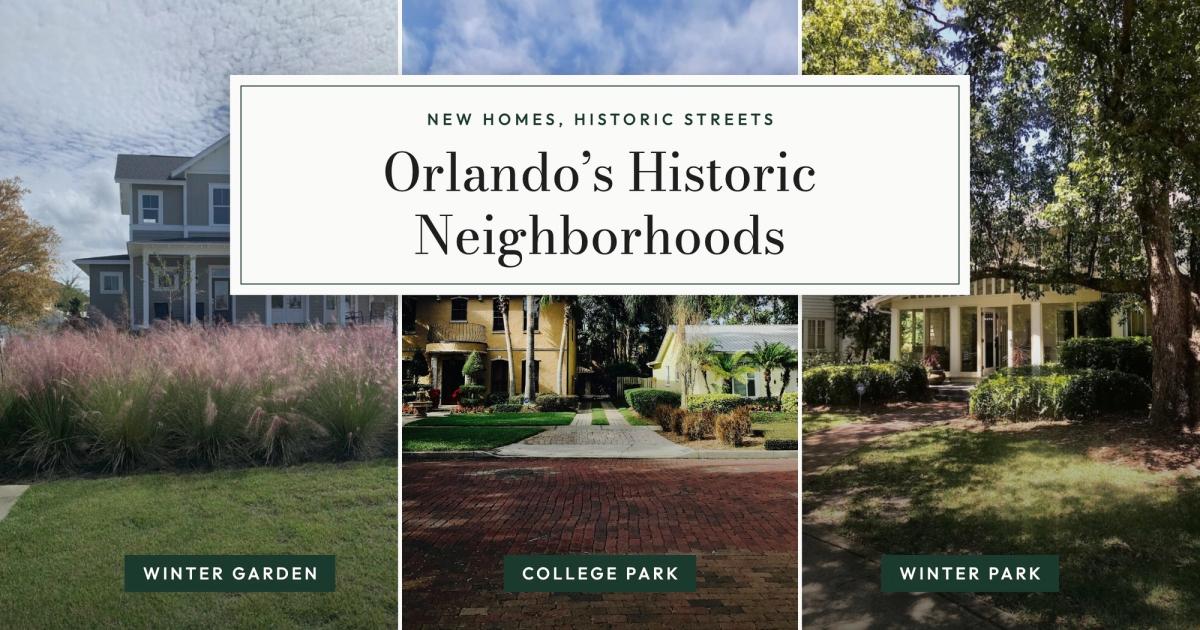
Winter Garden's citywide WalkScore is 30, but the blocks around Plant Street in the historic downtown score in the 80s and 90s, per WalkScore data. The West Orange Trail, a paved 22-mile path, runs directly through downtown, connecting homes to the Saturday farmers market and the shops along Plant Street on foot or by bike.
One example of how fast this changes: Chef's Table at the Edgewater and its sister restaurant, The Tasting Room, anchors of downtown dining since 2008, announced on July 16, 2026 that both will relocate to the historic Bond Building a block over, with an opening targeted for mid-2027. Service continues uninterrupted at the current Edgewater Hotel location in the meantime. It is exactly the kind of detail a two-year-old blog post gets wrong, which is why I put a date on every specific claim here.
Explore the Winter Garden neighborhood guide.
4. Baldwin Park
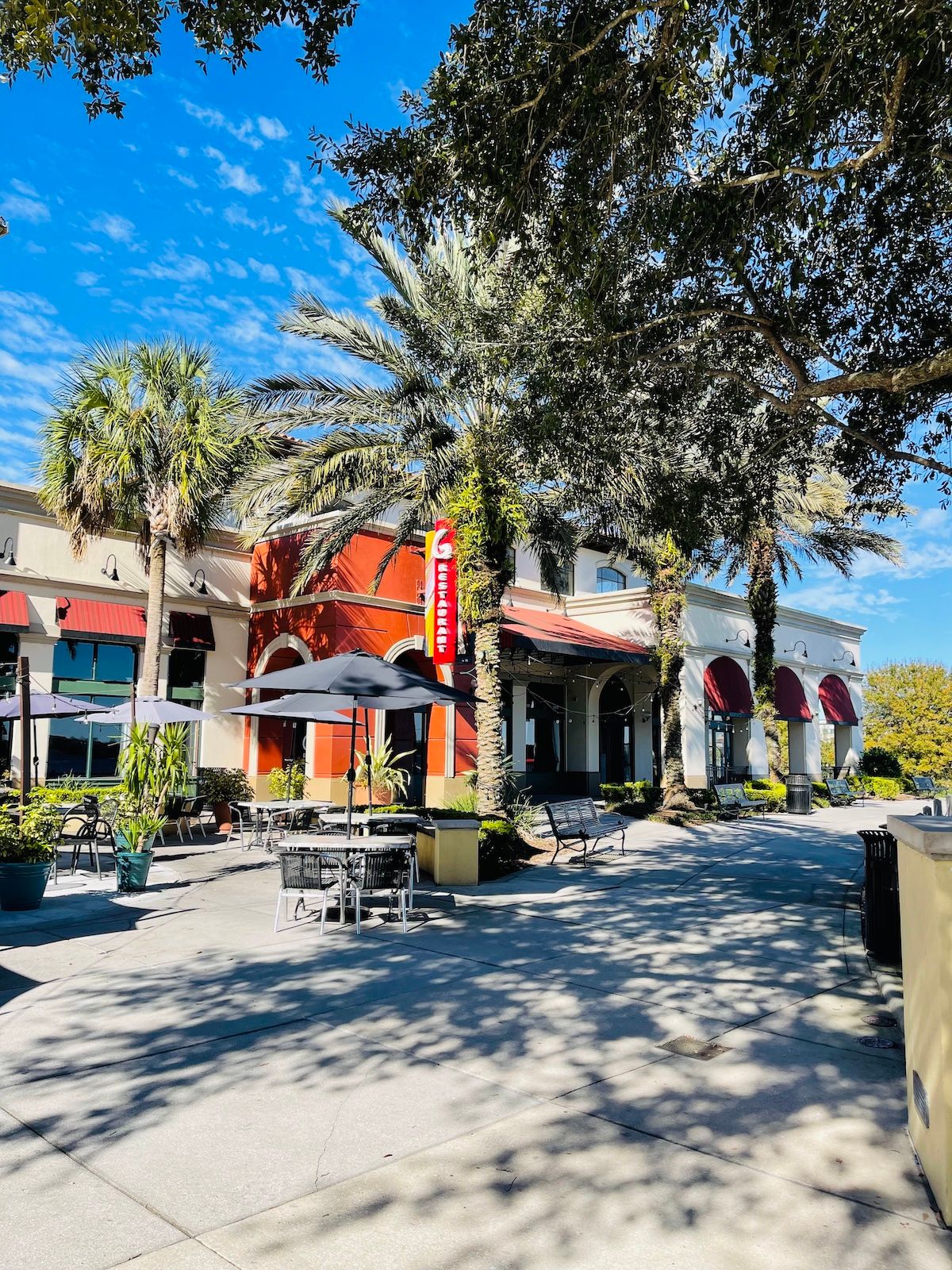
Baldwin Park carries a neighborhood WalkScore of 55, the 23rd most walkable neighborhood in the city of Orlando, according to WalkScore, well ahead of Orlando's 41-point citywide average. Sidewalks connect homes to the Village Center's shops and restaurants along Lake Baldwin.
Baldwin Park has one of my favorite histories in Orlando. It sits on the former Orlando Naval Training Center, which closed in 1994 and was redeveloped starting in 2001. That history explains the street grid: narrower streets, alley-loaded garages, and front porches set close to the sidewalk, built deliberately on New Urbanist principles rather than around cul-de-sacs. That grid is doing real work. It is a large part of why Baldwin Park outwalks newer master-planned communities built around collector roads.
Explore the Baldwin Park neighborhood guide.
5. Celebration
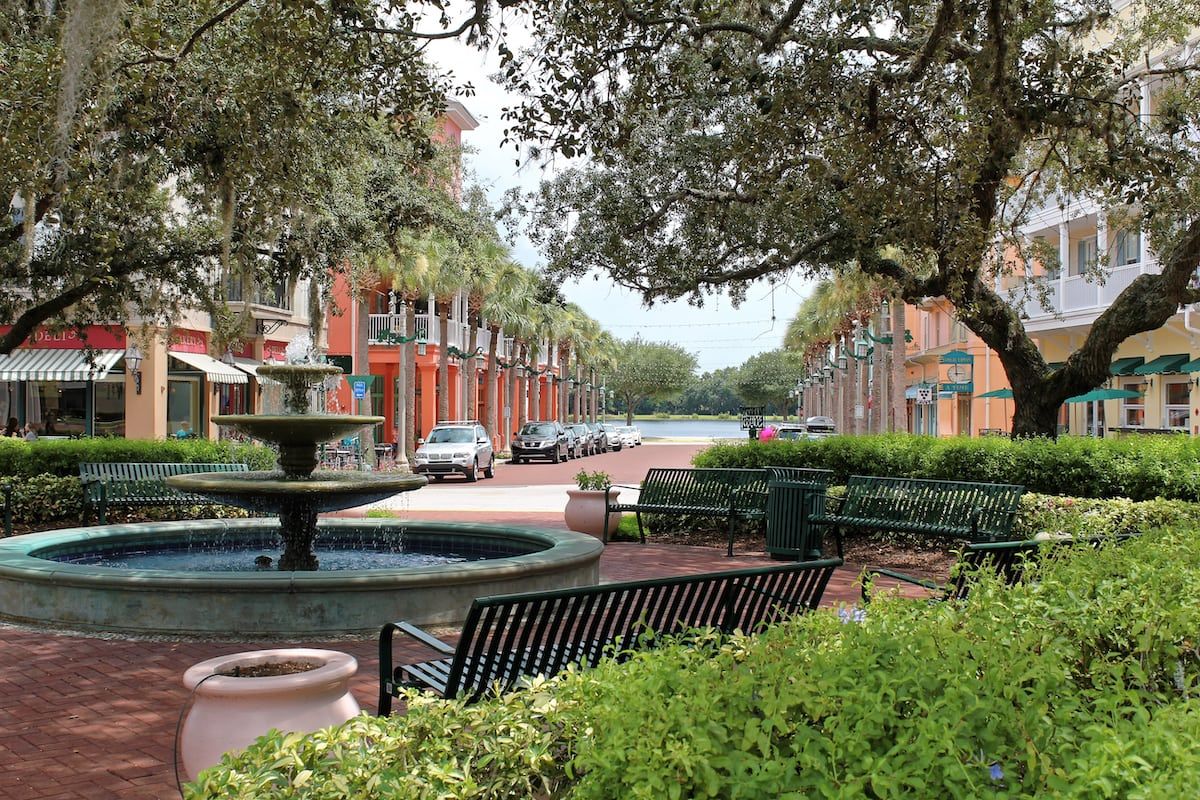
Celebration's WalkScore averages 36 across the town as a whole, but addresses closest to the downtown core score noticeably higher, in the 60s, per current listing data. The downtown itself, developed by The Walt Disney Company starting in the mid-1990s, was built around a walkable town square from day one.
Shops, restaurants, and lakeside paths sit within a few blocks of the downtown core, with miles of additional walking and biking trails through the wider community. As with Winter Garden, the pattern holds: a walkable center inside a town whose outer neighborhoods are built for driving.
Explore the Celebration neighborhood guide.
6. Lake Nona's Laureate Park
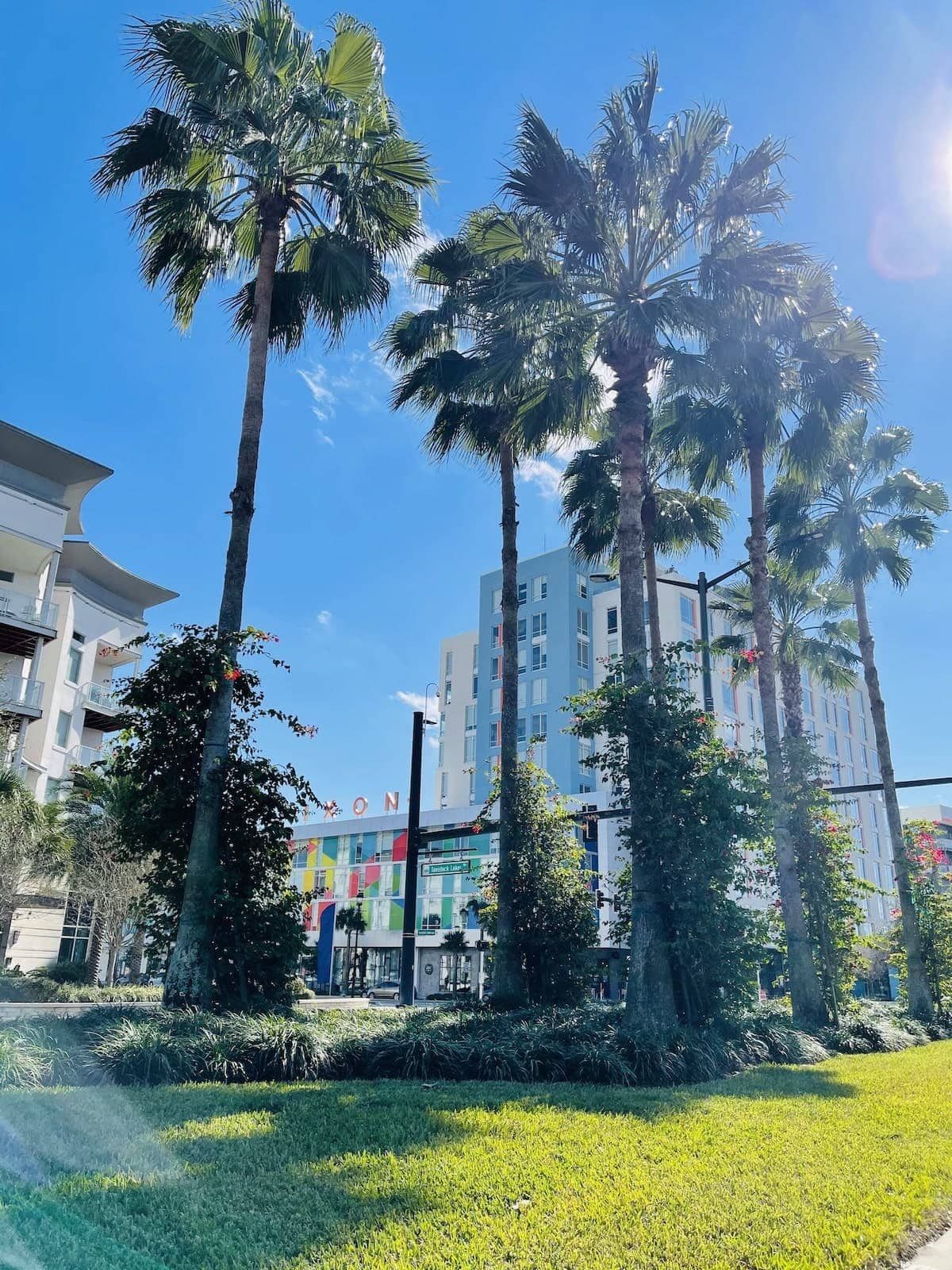
Laureate Park is where the difference between "walkable" and "trail-connected" matters most. Individual addresses in the community score between 5 and 40 on WalkScore, officially car-dependent to somewhat friendly, even though residents have access to Lake Nona's 44 miles of hike-and-bike trails, a resort-style aquatic center, and a Village Center.
David Weekley Homes has built here since Laureate Park's earliest phases. The trails do connect residents to the Village Center, Lake Nona Medical City, and Boxi Park on foot or by bike, but that is a different kind of connectivity than being able to walk to a grocery store for a Tuesday errand. Both things can be true at once, and the first question I ask relocation buyers comparing this list is which one they are actually shopping for.
Explore the Lake Nona neighborhood guide.
7. Hamlin at Horizon West
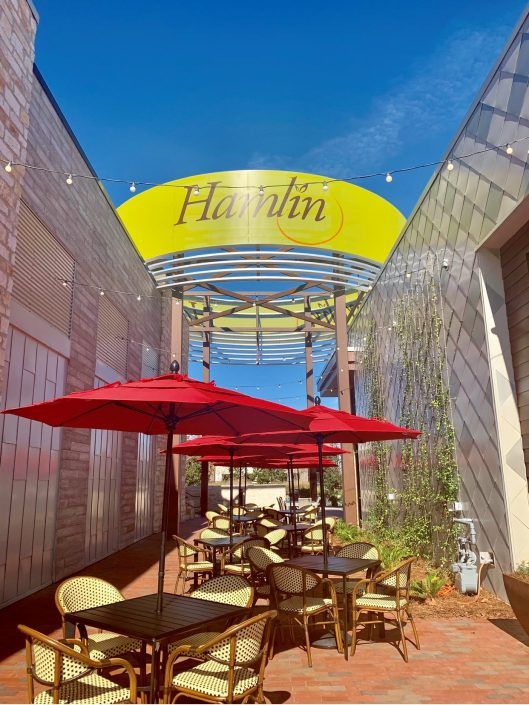
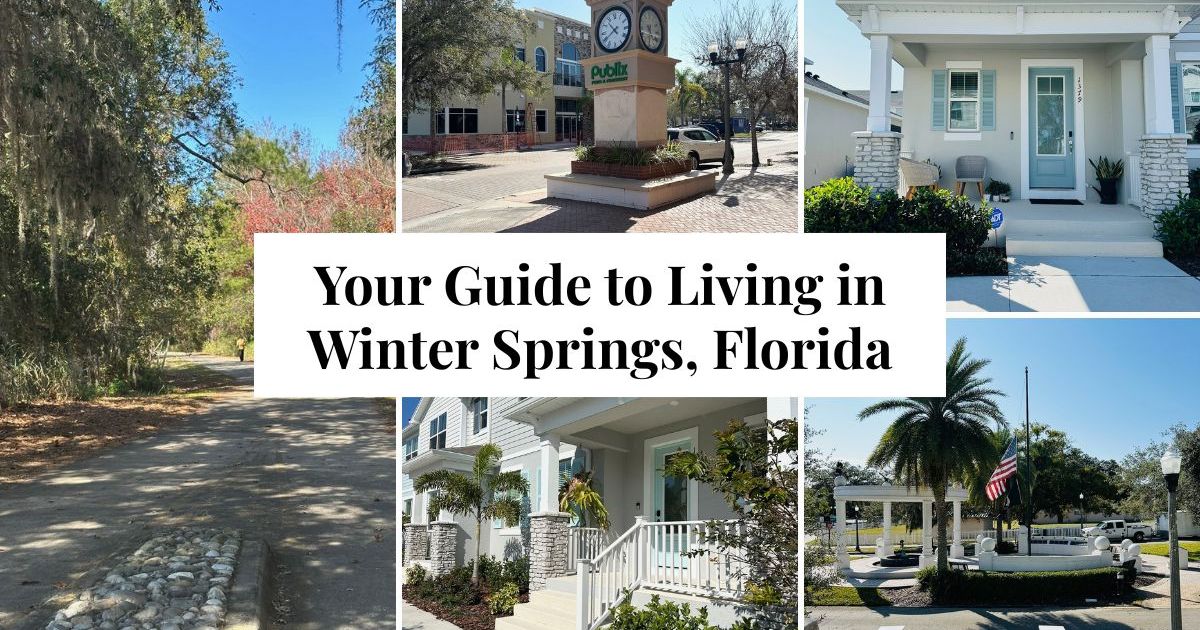
Hamlin Town Center functions the same way Laureate Park's Village Center does: a walkable retail and dining core, anchored by Publix and a Cinepolis theater, inside a broader community built for driving and golf carts between villages. Horizon West sits within the city of Winter Garden, whose citywide WalkScore averages 30.
Toll Brothers is currently building single-family homes and townhomes in Horizon West as of 2026, alongside other national and regional builders active in the area.
My advice here is the same as for Laureate Park: check whether daily errands mean a walk to Hamlin or a drive, because both exist inside the same community depending on which section you buy in.
Explore the Horizon West neighborhood guide, or compare the two newest communities on this list in Horizon West vs Lake Nona.
What People Get Wrong About "Walkable" Here
The biggest misconception I see relocation buyers bring to this list is that a high WalkScore and a livable master-planned community are the same test. They are not.
WalkScore measures the odds you can run daily errands, groceries, a pharmacy, a restaurant, on foot from a specific address.
Laureate Park's individual addresses mostly score between 5 and 40 on that scale even though Lake Nona's trail network runs 44 miles. The trails measure recreation and connectivity. WalkScore measures something narrower: whether you need a car for your Tuesday.
The second thing buyers miss is how these amenities get paid for. A walkable village center, extra trail mileage, and a resort-style aquatic center do not appear from a developer's goodwill. In Central Florida's newer master-planned communities, they are typically funded through a Community Development District, a special taxing district that shows up as its own line on the tax bill, separate from the county and city portions, with debt often amortized over 20 to 30 years.
Before writing an offer in a CDD-funded community, ask for the district's current assessment schedule, not just this year's number. I ran a closing company for 23 years, and that schedule is the kind of document we reviewed line by line. It tells you far more than a listing agent's summary of "low HOA fees."
Next Step
WalkScore is one input, not the whole decision. Budget, commute, builder timeline, and CDD or HOA structure all shape whether a specific home in a specific community fits how you actually live day to day.
Still narrowing the list? Take the Neighborhood Quiz, built to match your answers to more than a WalkScore, in about three minutes: NicoleMickle.com/Quiz
Already know which one? Schedule a conversation with me directly: NicoleMickle.com/Contact
Frequently Asked
Questions, answered
Which Orlando neighborhood has the highest WalkScore?
South Eola, part of Downtown Orlando, has the highest neighborhood WalkScore in the city at 91 out of 100, according to WalkScore's Orlando neighborhood rankings as of October 2026. The Orlando Central Business District and Lake Eola Heights follow close behind at 85, with Thornton Park at 83. All four sit within Downtown Orlando's urban core, where a $750,000-plus budget more often buys a condo or townhome than a detached house.
What's the difference between a walkable historic downtown and a walkable master-planned community?
A historic downtown like Winter Park or Winter Garden was built on a pre-automobile street grid, so WalkScore ratings in the 80s and 90s reflect real proximity to groceries, restaurants, and services on foot. A newer master-planned community like Lake Nona's Laureate Park or Celebration is typically built around trails and a central village center instead, which shows up as a lower WalkScore even though residents describe the lifestyle as walkable.
Is public transportation available in Orlando's walkable neighborhoods?
Winter Park and Downtown Orlando both have SunRail commuter rail stops, and Downtown Orlando adds Lynx bus routes on top of that. Winter Garden, Baldwin Park, Celebration, and the newer Horizon West communities do not have rail access and rely on a car or golf cart for anything outside the immediate walkable core.
Which builders are active in Orlando's walkable master-planned communities?
David Weekley Homes has built in Lake Nona's Laureate Park since its earliest phases, and Toll Brothers is currently building single-family homes and townhomes in Horizon West as of 2026. I work directly with a number of national and regional builders active across Central Florida's master-planned communities. Builder lineups and available homesites change by phase, so ask me for what's currently available before you visit a model home on your own.
Should a relocation buyer choose a walkable community sight unseen?
Walkability scores are a useful screen, not a substitute for a visit. A WalkScore of 85 describes the address, not the specific home, its lot, or whether the walk to the village center crosses a busy collector road. For buyers relocating from out of state, pairing the data in this guide with a scheduled visit, or a local advisor who can walk the specific block, closes the gap a spreadsheet cannot.