Best Flooring for New Construction Homes in Florida
How porcelain tile, luxury vinyl plank, engineered hardwood, and carpet compare in a new Central Florida home, and how to choose at the design center.

Nicole Mickle
Realtor, Olympus Executive Realty
TL;DR
- Most popular in Central Florida: porcelain tile, including wood-look tile, because it handles humidity, sand, pets, and pool traffic well.
- Best value: luxury vinyl plank (LVP) is water-resistant, quieter and softer underfoot than tile, and often costs less at the design center.
- For a real wood look: choose engineered hardwood over solid hardwood in Florida's humidity, and keep it out of wet areas.
- Plan the whole floor: running one material through the main living areas makes a home feel larger and avoids awkward transitions.
Flooring is one of the biggest choices you'll make at a builder's design center, and one of the hardest to change later. I'm Nicole Mickle, a Central Florida relocation and new construction specialist, and I help clients think through design selections with resale and Florida living in mind. Here's how the most common flooring options compare in a new Central Florida home.
What is the best flooring for a new construction home in Florida?
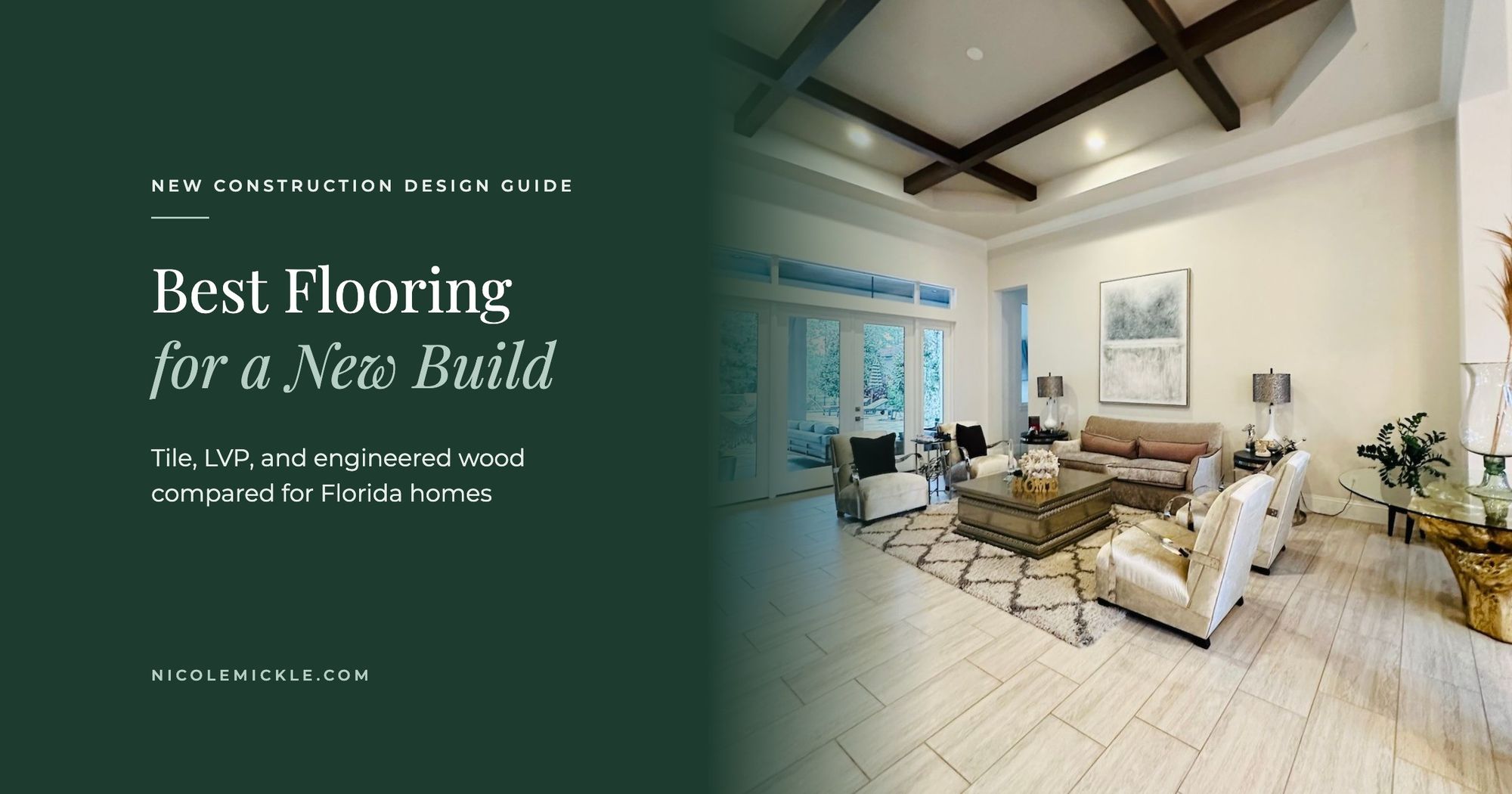
For most new construction homes in Central Florida, porcelain tile, including wood-look porcelain, is the most durable choice for main living areas because it stands up to humidity, water, sand, and pets. Luxury vinyl plank is a strong, more affordable alternative that's quieter and softer underfoot. Engineered hardwood works for buyers who want real wood, as long as it stays out of wet areas. Carpet is still common in bedrooms and upstairs spaces.
| Flooring | Best for | Watch out for |
|---|---|---|
| Porcelain or wood-look tile | Main living areas, kitchens, baths, pool access | Hard and noisy underfoot |
| Luxury vinyl plank | Living areas and upstairs, budget-friendly | Can fade in strong direct sun |
| Engineered hardwood | A real wood look in dry living areas | Not waterproof, keep out of wet areas |
| Carpet | Bedrooms, bonus rooms, stairs | Shows wear and holds allergens |
Porcelain and wood-look tile

Porcelain tile is the default in many Central Florida homes for good reason. It's hard to damage, handles water from pool doors and wet feet, and stays cool in summer. Wood-look porcelain gives you the warm look of hardwood with tile's durability, and large-format tiles mean fewer grout lines. The trade-offs are that tile is hard underfoot, can be noisy, and costs more to install than vinyl.
Luxury vinyl plank (LVP)

LVP has become a popular upgrade over standard builder flooring. Quality products are water-resistant, comfortable to walk on, and quieter than tile, which matters upstairs in two-story homes. Look at the wear layer thickness when comparing options, since it affects how well the floor resists scratches. LVP can fade in strong, direct sun, so consider window treatments for rooms with large glass doors.
Engineered hardwood

If you want real wood, engineered hardwood is a better fit for Florida than solid hardwood. Its layered construction moves less with changes in humidity. It still isn't waterproof, so keep it out of bathrooms, laundry rooms, and areas near pool doors. Ask the design center about the thickness of the top wood layer, which determines whether it can be refinished later.
Carpet
Carpet is still common in bedrooms, bonus rooms, and on stairs, where it adds comfort and reduces noise. Many buyers choose tile or LVP in the main living areas and carpet in bedrooms to balance cost and comfort.
How do you choose at the design center?
- Think about how you'll live: pets, a pool, and frequent guests all point toward tile or LVP.
- Keep it consistent: one material through the main living areas usually looks better and feels larger than several.
- Compare builder pricing: flooring is one upgrade you can sometimes add after closing, so compare the builder's price with local installers. Doing it before you move in is still much easier.
- Get samples: look at them in your home's light before you commit.
My guide to luxury upgrades for a new build covers which design center choices are worth making before drywall, and my post on when you pay for a new construction home explains when option payments are due.
Building or buying new in Central Florida?
I can help you plan your design center appointment and compare builders' standard and upgraded flooring packages. Reach out to me, or browse new construction communities in Central Florida.
Frequently Asked
Questions, answered
What is the best flooring for a new home in Florida?
For most main living areas, porcelain or wood-look tile is the most durable choice because it handles humidity, water, sand, and pets. Luxury vinyl plank is a quieter, more affordable alternative.
Is hardwood a good choice in Florida?
Solid hardwood can move with Florida's humidity, so engineered hardwood is usually the better choice if you want real wood. Keep it out of bathrooms, laundry rooms, and areas near pool doors.
Is luxury vinyl plank better than tile?
It depends on the space. LVP is softer, quieter, and often less expensive, which makes it popular upstairs. Tile is harder to damage and better near pools and wet areas.
Should I upgrade flooring through the builder?
Flooring can sometimes be added after closing, so compare the builder's price with local installers. Upgrading before you move in is still much easier than replacing floors in an occupied home.