Multigenerational Homes in Orlando: What to Know
How multigenerational homes work in Orlando: suites, casitas, and ADUs, what zoning and HOAs allow, how ADU income can help you qualify, and how to structure ownership when households buy together.

Nicole Mickle
Realtor, Olympus Executive Realty
TL;DR
- A multigenerational home gives two or more adult households private space under one roof or on one lot, usually through a first-floor suite, a home-within-a-home suite with its own entrance, a casita, or an accessory dwelling unit (ADU).
- It's a steady share of the market. In NAR's 2026 Home Buyers and Sellers Generational Trends report, 14% of buyers purchased a multigenerational home, down from 17% the year before.
- Zoning and HOA rules decide what you can do with the extra space. The City of Orlando allows ADUs in residential districts with size limits, owner occupancy, and no short-term rentals, and many HOAs add their own restrictions.
- ADU rent can now help you qualify. Since March 2026, Fannie Mae lets ADU rental income count toward qualifying income on a one-unit primary residence, up to 30% of total qualifying income.
- When households pool money, put ownership in writing. How you hold title and what happens if someone moves out should be settled before closing.
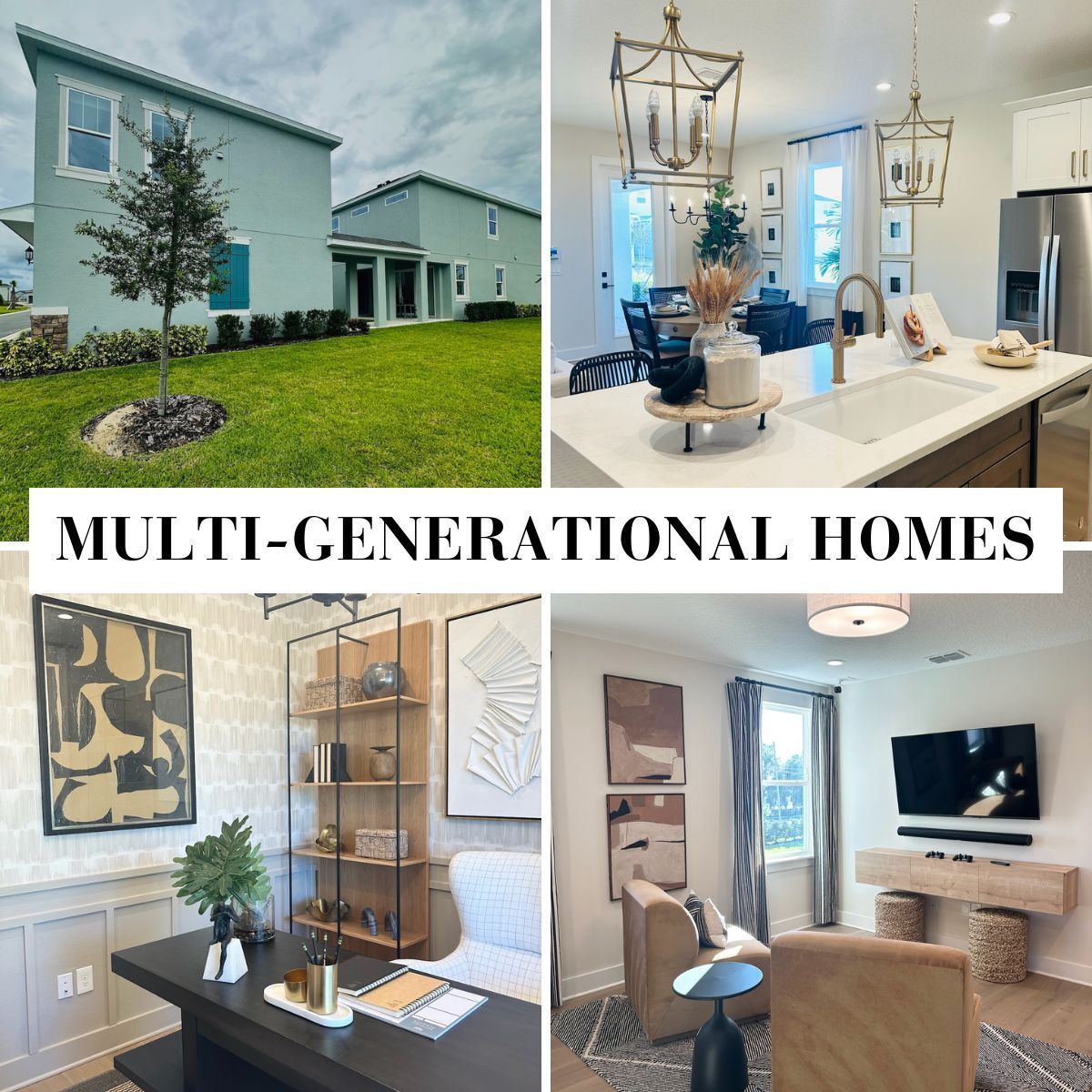
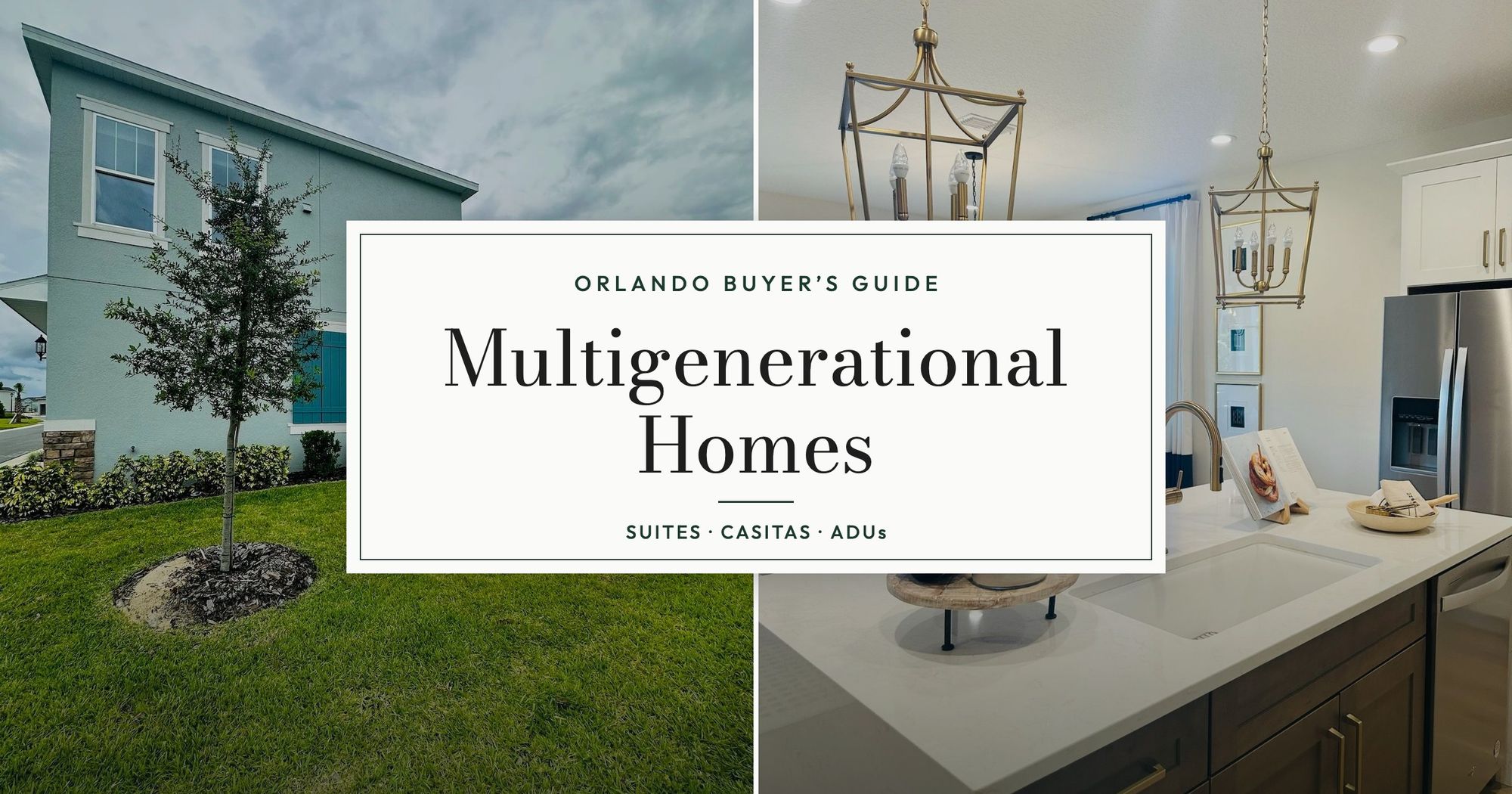
More buyers are looking for homes that work for more than one adult household, and builders around Orlando have responded with floor plans that go well beyond a spare bedroom. Some include a full suite with its own entrance, living room, and kitchenette. Others add a casita off the courtyard or a separate accessory dwelling unit on the lot.
I'm Nicole Mickle, a Central Florida relocation and new construction specialist. I've worked in real estate since 1996, including 23 years running a title and closing company, and the questions that come up on these purchases are as much about title, zoning, and financing as they are about floor plans. This guide covers the layouts, the rules, and the money, so you can buy the right space the first time.
What is a multigenerational home?
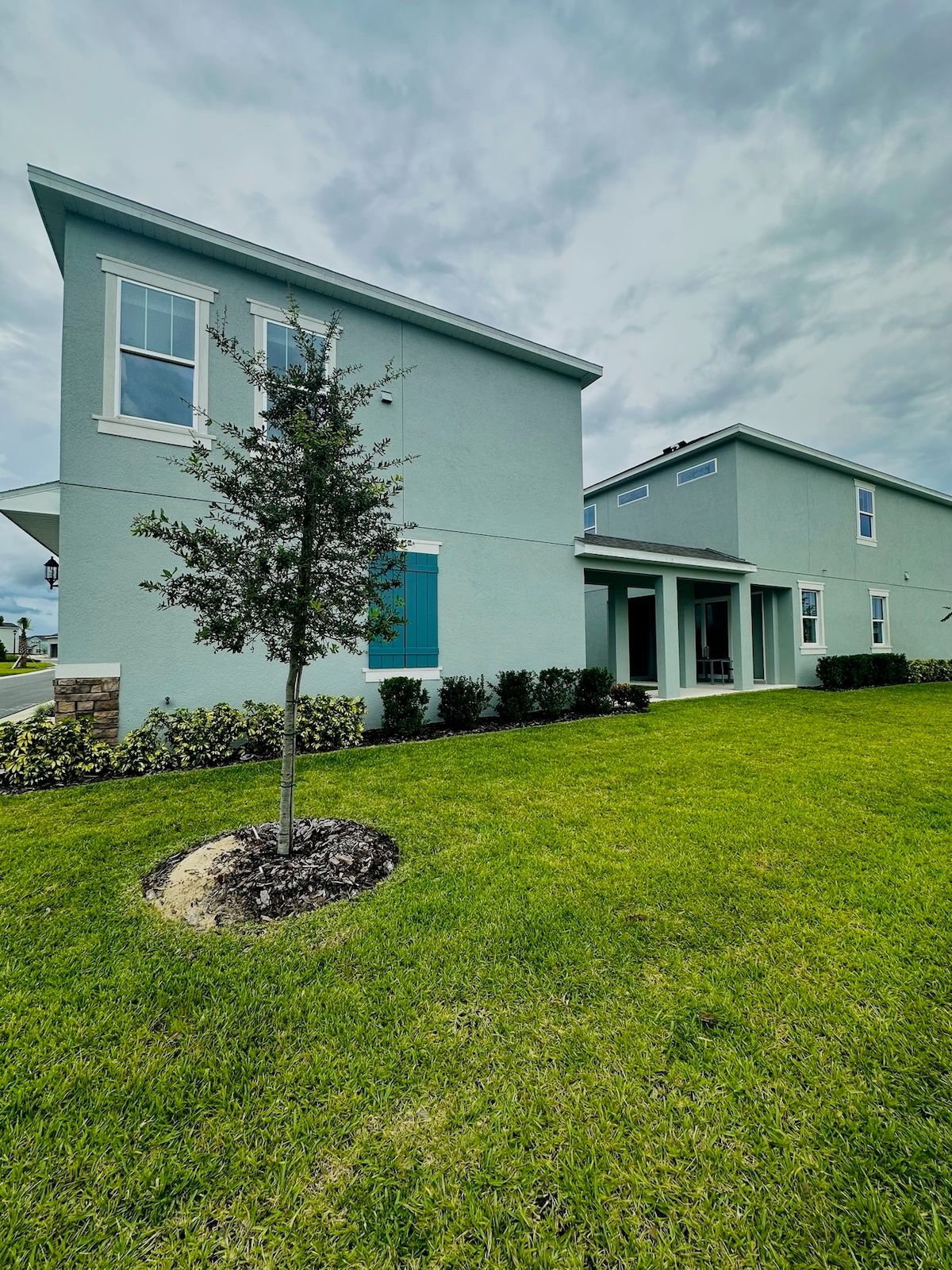
A multigenerational home is a house designed so two or more adult households can live together while keeping private space. The most complete versions include a separate suite with its own entrance, bedroom, bathroom, living area, and kitchenette, connected to the main home or on the same lot. Simpler versions add a first-floor bedroom suite or a flexible space that can be closed off from the rest of the house.
How common are multigenerational homes?
Multigenerational homes are a steady part of the market. According to the National Association of REALTORS® 2026 Home Buyers and Sellers Generational Trends report, 14% of buyers purchased a multigenerational home, down from 17% the year before. Buyers cited cost savings and caregiving among the top reasons. In Central Florida, builders now offer more floor plans with dedicated suites than they did a few years ago, especially in new construction communities.
What are the main types of multigenerational floor plans?
| Layout | What it usually includes | Where you'll find it | What to check |
|---|---|---|---|
| First-floor guest suite | Bedroom and full bath on the main floor, inside the home | Many two-story new construction plans | Distance from the main bedroom; shared or private laundry |
| Home-within-a-home suite | Private entrance, living area, kitchenette, bedroom, and bath attached to the main home | Select builder plans in new construction communities | HOA rules on renting; parking for two households |
| Casita | Detached or courtyard suite with bedroom and bath, sometimes a kitchenette | Luxury new construction and custom homes | Permits, insurance, and whether it counts as a separate dwelling |
| Accessory dwelling unit (ADU) | A separate, self-contained dwelling with its own kitchen on the same lot | Resale and custom builds where zoning allows | Local zoning, owner-occupancy rules, and minimum rental terms |
| Flex room conversion | A den, loft, or bonus room adapted into private space | Most floor plans | Bathroom access and sound separation |
Which features matter most in a multigenerational home?
The features that make shared living work are the ones that create privacy and independence for each household:
- A separate entrance so each household can come and go without passing through the other's space.
- A kitchenette or second kitchen, within what local zoning allows.
- A full bathroom and laundry close to the suite.
- Sound separation between the suite and the main bedrooms, through placement, insulation, or both.
- Separate HVAC zoning so each space controls its own temperature.
- Parking for more than one household, and a driveway that fits it.
- Step-free entry and wider doorways into the suite, which make moving furniture and everyday use easier.
Can ADU rental income help you qualify for a mortgage?
Yes, in some cases. Fannie Mae now allows rental income from an accessory dwelling unit to count toward qualifying income, according to a Pennymac announcement of the March 2026 Desktop Underwriter update. The property must be a one-unit principal residence, the loan must be a purchase or limited cash-out refinance, income can come from only one ADU, and that income can't exceed 30% of your total qualifying income. Ask your lender how they apply it, since documentation rules still apply. You can test different payments in the mortgage calculator.
What zoning and HOA rules apply to multigenerational homes in Orlando?
Rules depend on where the home sits. Inside the City of Orlando, accessory dwelling units are allowed in residential districts, limited to between 500 and 1,000 square feet, with the owner required to live on the property and no rentals shorter than 30 days, according to Steadily's summary of Orlando ADU rules. Orange County and other cities set their own rules, so check with the local planning department before you buy.
In master-planned communities, the HOA can be just as important as zoning. Many restrict renting a suite or casita separately, limit short-term rentals, or set parking rules. Read the HOA documents before you sign, especially if you plan to rent the space later.
How should you hold title when households buy together?
When two households pool money for one home, decide how you'll own it before closing. Florida offers several ways to hold title, including joint tenancy with right of survivorship and tenancy in common, and each handles ownership shares and inheritance differently. From the closing side, the purchases that went smoothly had a written agreement covering who paid what, who pays ongoing costs, and what happens if one household moves out or wants to sell.
Taxes deserve the same attention. The homestead exemption applies to the owner's permanent residence, and renting out part of a homestead can affect the exemption on that portion, so ask the county property appraiser before you lease a suite or ADU. For more on how Florida taxes new homes, read why taxes go up in year two on new construction. A Florida real estate attorney can help you choose how to title the home and draft the agreement.
What do buyers get wrong about multigenerational homes?
The most common mistake I see is buying a suite you plan to rent without checking that you legally can. A space marketed as a "suite" or "casita" may not meet the definition of a separate dwelling, and HOA rules can prohibit renting it on its own.
The second mistake is skipping the paperwork when households combine. Contributions, title, and an exit plan are easy to agree on before closing and much harder later. The third is choosing the floor plan before the lot. A suite with its own entrance only works if the driveway, parking, and lot layout support two households.
Where can you find multigenerational homes in Orlando?
Many new construction communities across Central Florida offer plans with a first-floor suite, and several builders offer full home-within-a-home layouts in select communities. Resale options exist too, often in older homes with in-law suites or casitas, but they take more searching. Start with current new construction communities, compare builders in our guide to Orlando home builders, and see one-story vs two-story homes for how primary-down plans fit in.
Want help finding a home with a separate suite?
I'll help you compare floor plans, check zoning and HOA rules, and plan how to structure the purchase before you sign. Schedule a conversation with Nicole.
Frequently Asked
Questions, answered
What is a multigenerational home?
A multigenerational home is a house designed so two or more adult households can live together while keeping private space. Common layouts include a first-floor suite, a home-within-a-home suite with its own entrance and kitchenette, a detached casita, or an accessory dwelling unit on the same lot. The best designs add a separate entrance, sound separation, and separate climate control.
How many buyers purchase multigenerational homes?
According to the National Association of REALTORS® 2026 Home Buyers and Sellers Generational Trends report, 14% of buyers purchased a multigenerational home, down from 17% the year before. Cost savings and caregiving were among the top reasons buyers gave. In Central Florida, more new construction floor plans now include dedicated suites than a few years ago.
Can I build an ADU on my property in Orlando?
Inside the City of Orlando, accessory dwelling units are allowed in residential districts with limits: generally between 500 and 1,000 square feet, the owner must live on the property, and rentals must be longer than 30 days. Orange County and other cities have their own rules, and HOAs can add restrictions. Check with the local planning department before you buy or build.
Can rental income from an ADU help me qualify for a mortgage?
Fannie Mae now allows rental income from one accessory dwelling unit to count toward qualifying income on a one-unit principal residence, for a purchase or limited cash-out refinance, starting with its March 2026 underwriting update. ADU income can't exceed 30% of your total qualifying income, and standard rental income documentation still applies. Ask your lender how they apply the rule.
How should two households hold title to a shared home in Florida?
Florida offers several ways to hold title, including joint tenancy with right of survivorship and tenancy in common, and each treats ownership shares and inheritance differently. When households pool money, put a written agreement in place covering contributions, ongoing costs, and what happens if someone moves out or wants to sell. A Florida real estate attorney can help you choose.