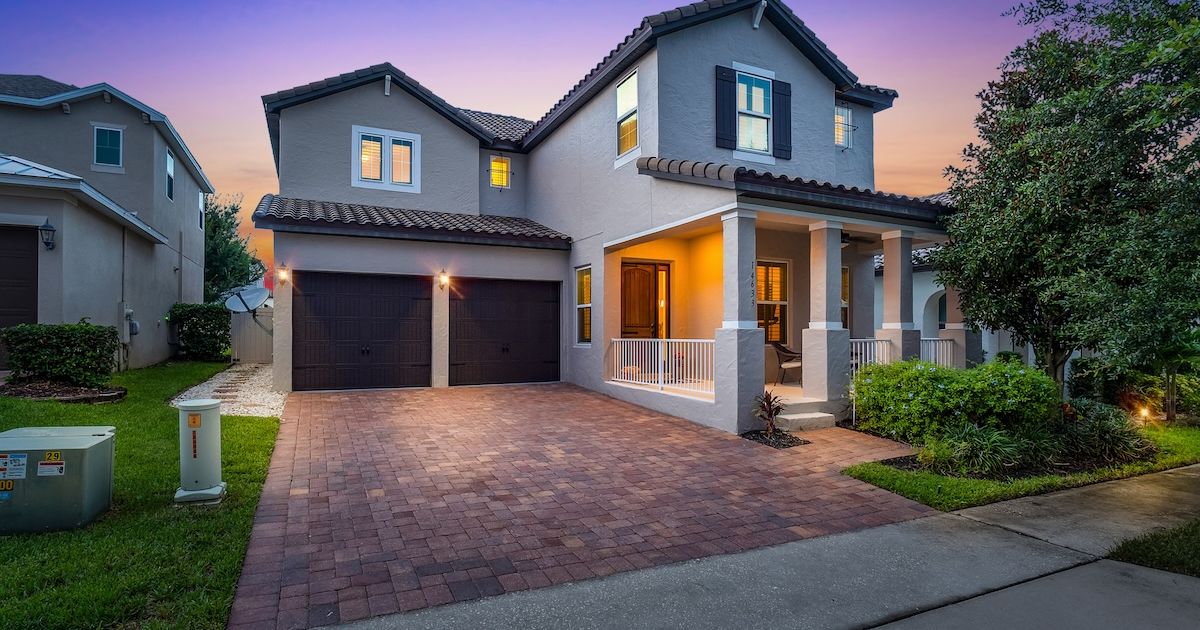
New Construction vs. Resale in Orlando: What Nobody Tells You Before You Decide
New construction or resale in Orlando? What relocating buyers miss about Florida roof age and insurance, where each option wins, and how to weigh builder incentives.

Nicole Mickle
Realtor, Olympus Executive Realty
TL;DR
- Move-in ready is not the same as new. A quick move-in new build can close fast, and a resale home can come with deferred maintenance.
- Roof age drives Florida resale. Ask the roof's age first, since it shapes your insurance options, inspections, and monthly cost.
- New construction wins on warranty and systems. Expect a builder warranty, new systems, and current energy codes.
- Resale wins on location and timing. Established neighborhoods like Winter Park and College Park are mostly resale, and resale closings are more predictable.
- Shop the builder's lender offer. Compare incentives against an outside loan estimate before you sign.
You have started your home search, and you are already facing your first real decision: new construction or an existing home?
I hear this from almost every buyer relocating from out of state. You want the best value for your money, and suddenly there is an option you never seriously considered: building new. So you end up doing late-night research, trying to weigh finishes against neighborhoods against timelines.
Here is the honest answer. There is no universally right choice, but there is a right choice for you, and most buyers do not figure out what it is until they are far into the process. I never want you to feel stuck, like it is too late to step back and start over.
One question I hear on almost every discovery call: "I just want a move-in ready home. Doesn't that mean resale?"
Not necessarily. This is the first place buyers get tripped up. New construction in Orlando can mean a quick move-in home that closes in about 30 days, or a build of six months or more where you are choosing your own tile and cabinet hardware. Resale can mean truly move-in ready, or it can mean inheriting someone else's deferred maintenance and a roof that limits your insurance options.
Sometimes the best deal is a home that blurs the line entirely: a brand-new home the builder just completed, or one a previous buyer walked away from. Some of the best deals I have found for my clients have come from exactly those situations.
The key point: move-in readiness is not the same as new versus old. Keep those two ideas separate, and the whole decision gets clearer.
What do buyers miss about resale homes in Florida?
If you are coming from New York, New Jersey, or Chicago, Florida's resale market has a few landmines that will catch you off guard.
Roof age is the biggest one. Under Section 627.7011, Florida Statutes, an insurer cannot refuse to write or renew a homeowners policy solely because the roof is less than 15 years old. For a roof 15 years or older, you can have it inspected, and if the inspection shows at least five years of useful life remaining, the insurer cannot refuse coverage based on roof age alone. In practice, an older roof still often means an inspection, fewer carriers to choose from, and a higher premium. Before you fall in love with a resale home, roof age should be one of your very first questions.
You will also run into 4-point inspections and wind mitigation reports. Insurers commonly ask for a 4-point inspection on older homes, and a wind mitigation report can lower your premium if the home has qualifying features. Depending on what they turn up, both can change your monthly costs more than you expect.
I have watched relocation buyers get blindsided by this after they were already emotionally invested. That is avoidable.
Where does new construction have a clear edge?
- Warranties. A new build typically comes with one year of workmanship coverage, two years on mechanical systems, and ten years of structural coverage. That cushion does not exist with resale.
- Insurance. A new roof, new systems, and current wind codes usually mean easier insurance shopping and a lower premium than a comparable older home. Get quotes on both before you decide.
- Energy costs. New homes are built to current Florida energy codes, with modern HVAC, insulation, and windows. Older homes can cost noticeably more to keep comfortable through a Florida summer.
Where does resale win?
- Location. Established neighborhoods like Winter Park, Dr. Phillips, Longwood, and College Park are not getting master-planned new construction. If a walkable, tree-lined, already-grown neighborhood matters to you, resale is often your only way in.
- Timeline certainty. Resale typically closes in 30 to 45 days. If you have a lease ending or a job start date, that predictability has real value.
- Character. This sounds soft until you are standing in a 1950s ranch in Winter Park with original terrazzo floors and a backyard that took 40 years to grow in. Some things cannot be built from a spec sheet.
What should you ask about builder incentives before you sign?
Here is something I see constantly: a buyer walks into a model home, gets drawn in by the design center, and signs with the builder's preferred lender without shopping the rate.
Builders often offer closing cost credits and rate buydowns that are tied to their affiliated lender, and those incentives can be real money. They are not always the best long-term financial decision, though. Treat the builder's offer as your baseline, get a competing loan estimate from an independent lender, and compare the full picture over the life of the loan.
This is where an agent who knows how builders negotiate makes a difference. Base price rarely moves, but closing cost contributions, design center credits, lot premiums, and rate buydowns are often negotiable. My guide to whether new construction homes are negotiable covers what to ask for.
What question should you answer first?
What matters most to you: timeline, location, or both?
A buyer with a job starting in August and a lease ending in July is having a very different conversation than someone with six months to explore. Once I understand your timeline, your budget, and how you want your daily life to work, the new-construction-versus-resale question usually answers itself.
A real Orlando decision: two buyers, one area, two right answers
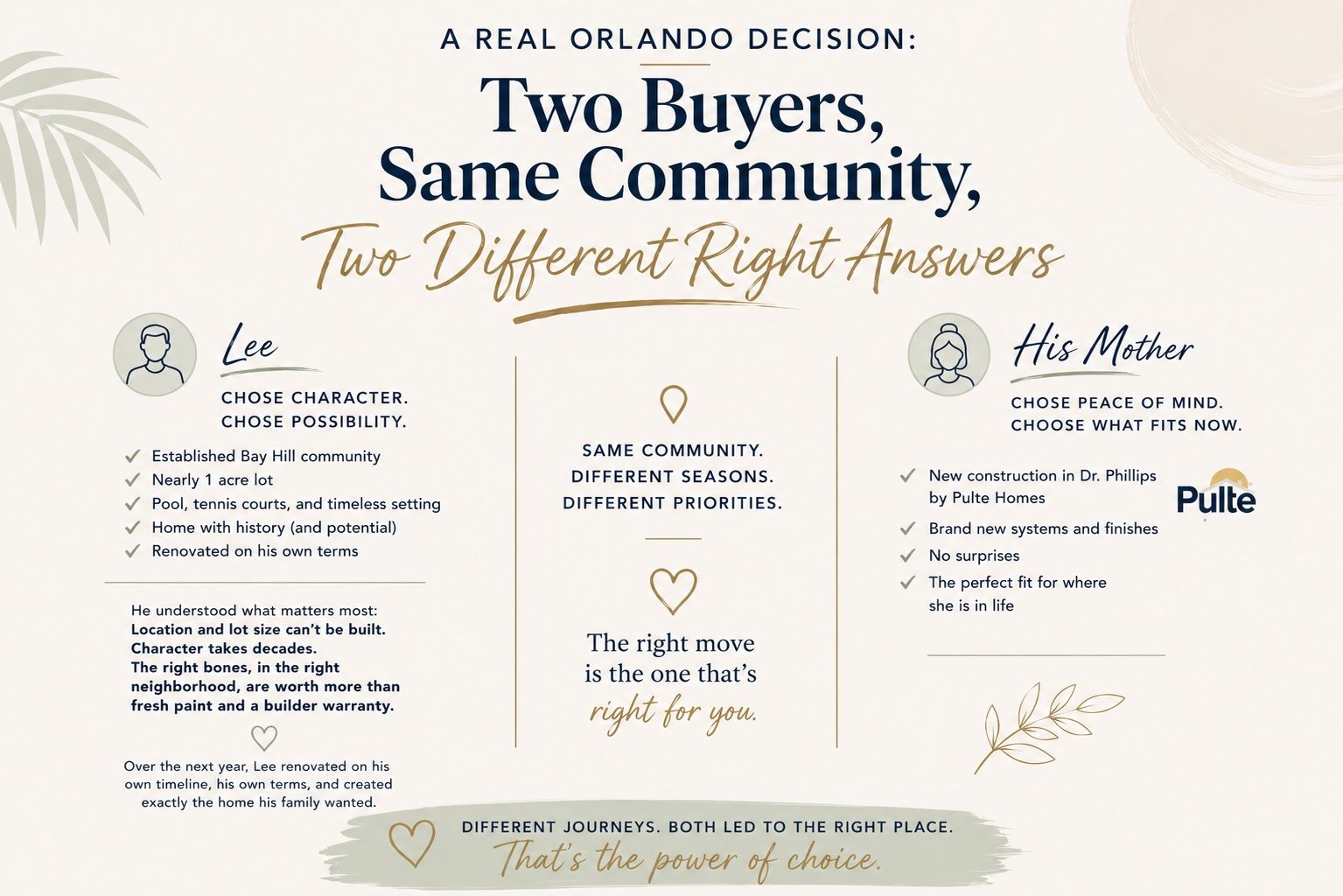
Lee and his family relocated from Maryland after touring both resale and new construction throughout the Dr. Phillips and Bay Hill area. They were not working from a checklist. They were looking for a feeling.
What they found in Bay Hill stopped them: a home nearly 20 years old, on close to an acre, with a pool and tennis court, inside one of Orlando's most established golf course communities. It was not turnkey. The roof had age on it, the finishes needed work, and Lee knew he was signing up for a renovation.
He did it anyway, because he understood something it takes most buyers years to learn. Location and lot size cannot be built from scratch. Character takes decades. And the right bones in the right neighborhood can be worth more than fresh paint and a builder warranty.
Over the following year, Lee renovated on his own timeline and his own terms, turning a house with history into exactly the home he wanted.
His mother watched the whole process and made a different call. She bought a brand-new home in Dr. Phillips: new construction, new systems, and no renovation to manage.
Same area. Same agent. Two completely different right answers.
Not sure which way to go?
There is no universal answer, only the one that fits your life right now. If you want to compare a specific resale home with a new build, the mortgage calculator shows the monthly difference, and my guide to the best home builders in Orlando covers who is building where. When you are ready, schedule a conversation with Nicole.
Frequently Asked
Questions, answered
Should I buy new construction or resale when relocating to Orlando?
It depends on your timeline, location priorities, and budget. New construction offers a builder warranty, new systems, and current energy codes. Resale gives you access to established neighborhoods and more predictable closings. A buyer with a fixed move date often benefits from resale or a completed new home, while a buyer who wants no deferred maintenance often benefits from new construction.
What should I know about buying a resale home in Florida?
Check the roof age first. Under Section 627.7011, Florida Statutes, insurers cannot refuse a policy solely because a roof is under 15 years old, and an older roof that passes an inspection showing at least five years of remaining life cannot be refused on age alone. Older roofs still often mean inspections, fewer carriers, and higher premiums. Expect a 4-point inspection on older homes and a wind mitigation report.
Do builders in Orlando negotiate?
Often, though rarely on base price. Closing cost credits, design center allowances, lot premiums, and rate buydowns are frequently negotiable, and many credits are tied to the builder's affiliated lender. Compare any lender incentive against an outside loan estimate, and bring your own agent from your first visit.
Which established Orlando neighborhoods are mostly resale?
Winter Park, Dr. Phillips, Bay Hill, Isleworth, and College Park are known for mature trees, waterfront lots, and established character. They have little large-scale new construction, so buyers who want them are usually looking at resale or a custom build on an existing lot.
How long does it take to close on new construction in Orlando?
It depends on the build stage. A completed home can close in roughly 30 to 45 days. A to-be-built home where you select your own finishes often takes six to 12 months. Quick move-in homes at various stages of completion can shorten that window.