How to Vet a Home Builder in Orlando: A Realtor's Insider Checklist
Before you put a deposit on new construction in Orlando, check the license, the permit history, the warranty, and the contract. Here is the seven-step checklist I use with my buyers.

Nicole Mickle
Realtor, Olympus Executive Realty
Every week I meet buyers relocating to Orlando who have already fallen for a model home. The kitchen was staged beautifully, the sales consultant was friendly, and the incentive flyer promised tens of thousands toward closing costs. What they haven't done yet is the unglamorous part: verifying who is actually building the house.
I'm Nicole Mickle, a Central Florida relocation and new construction specialist. I've worked in this industry since 1996, and for 23 years I ran a settlement company that coordinated closings nationwide. I've seen what happens at the closing table when a build goes sideways. The difference between a smooth build and a stressful one is almost never the floor plan. It's the builder.
Orlando has dozens of active builders, from national names such as Toll Brothers, Taylor Morrison, Lennar, D.R. Horton, Pulte, and David Weekley to small custom firms building on infill lots. Most build good homes. A few build exceptional ones. This checklist helps you tell the difference before you hand over a deposit. For profiles of the builders themselves, see my guide to home builders in Orlando.
How do you vet a home builder in Orlando?
To vet a home builder in Orlando, verify the builder's contractor license with the Florida DBPR, search its permit and inspection history in county records, and drive neighborhoods it finished two to three years ago. Then read reviews for warranty patterns, get the warranty and contract terms in writing, and schedule independent inspections at pre-drywall, pre-closing, and 11 months. It takes about a weekend, and it belongs before your deposit.
The Orlando builder vetting checklist at a glance
| Step | What to check | Where to check it | Red flag |
|---|---|---|---|
| 1. License | License status and discipline history | myfloridalicense.com (Florida DBPR) | Inactive or delinquent license, or a pattern of complaints |
| 2. Permits | Local permit volume and inspection results | Orange County Fast Track or your county's permit portal | Thin local history or repeated failed inspections on one trade |
| 3. Older streets | Homes finished two to three years ago | The builder's established community sections | Long stucco cracks, wavy rooflines, standing water near foundations |
| 4. Reviews | How the builder handles warranty claims | Google and BBB reviews, read for patterns | Repeated complaints about unanswered warranty requests |
| 5. Warranty | Coverage terms, claim process, notice deadlines | The builder's written warranty | Vague water-intrusion coverage or short notice windows |
| 6. Contract | Deposits, escrow, incentives, delay clauses | The builder's purchase agreement | Deposit escrow waived, incentives tied to unpriced conditions |
| 7. Inspections | Pre-drywall, pre-closing, and 11-month checks | Your own licensed home inspector | A builder that restricts third-party inspections |
Step 1: Verify the builder's license with the State of Florida
Every legitimate home builder in Florida holds a state contractor license through the Florida Department of Business and Professional Regulation (DBPR), usually as a Certified Residential Contractor, Certified Building Contractor, or Certified General Contractor. You can look up any builder for free at myfloridalicense.com. Florida makes this easy, and almost nobody does it.
Here's what to check on the license record:
- Status: "Current, Active." Not delinquent, suspended, or null.
- Complaints and discipline: The DBPR record shows public complaints and any disciplinary action. One resolved complaint over a decade isn't a red flag. A pattern is.
- Who holds the license: With smaller builders especially, confirm that the company on your contract is the licensed entity and that the person you're dealing with isn't borrowing someone else's credentials.
While you're at it, ask for certificates of liability insurance and workers' compensation coverage. A reputable builder produces these without hesitation.
Step 2: Pull the builder's permit history
Permit records show what a builder has actually built in Central Florida, not what its brochure says. In Orange County, anyone can search permits, addresses, and contractor licenses through Fast Track Online Services. Seminole, Lake, Osceola, and Polk counties have their own portals. Search the builder's name and look for:
- Volume: How many homes has the builder permitted locally in the last 24 months? Building for Florida's wind codes, sandy soils, and humidity is its own discipline. A builder with a thin local record is still learning Central Florida.
- Failed inspections: Every build fails an inspection occasionally. Chronic re-inspections on the same trade, such as framing, stucco, or roofing, tell you about subcontractor quality.
- Where they're building: If a builder is concentrated in a few master-planned communities, drive them. That's Step 3.
Step 3: Drive the two-year-old streets, not the model homes
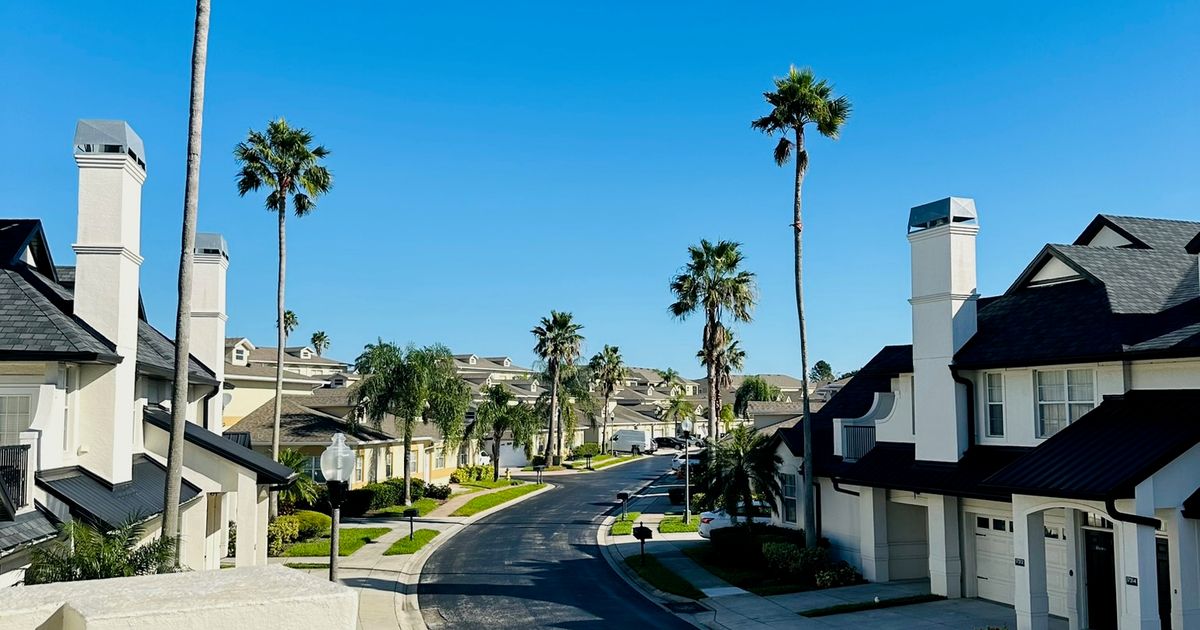
Model homes are theater. They're built by the builder's best crew, loaded with upgrades, and maintained daily. The honest version of a builder's work is a street finished 24 to 36 months ago, after a few Florida summers have graded the workmanship.
When I take relocation clients through the established sections of a community, here's what we look at:
- Stucco: Hairline cracking is normal in Florida. Long diagonal cracks running from window corners, staining, or patched sections deserve questions.
- Rooflines and fascia: Look for waviness, sagging gutters, or early discoloration.
- Lot drainage: Standing water near a foundation after an afternoon storm is a grading problem. In Central Florida, drainage is destiny.
- The neighbors: If someone is outside, ask how the warranty process went. Owners two years in will tell you the truth in ninety seconds.
Step 4: Read builder reviews for patterns, not stars
Reviews for production builders are noisy because people mostly post at emotional extremes. Ignore the star average and read for patterns.
- Warranty response after closing is the most telling complaint. Nearly every builder is attentive before closing. The good ones are still attentive at month eleven.
- Delays need context. Most Orlando builds take 6 to 12 months, and weather, permitting, and supply chains shift timelines for everyone. What matters is whether the builder communicated.
- Watch how the builder answers criticism in public. Defensive replies to reasonable complaints tell you how your punch-list calls will go.
Step 5: Get the warranty terms in writing before you sign
Most Orlando builders offer a version of the 1-2-10 warranty: one year on workmanship and materials, two years on systems such as electrical, plumbing, and HVAC, and ten years on major structural defects. In Florida, read the water-intrusion language most closely. Some builders add separate coverage for it, and it's the section most likely to matter in this climate.
Three things I make sure my buyers confirm in writing:
- Who services the warranty: The builder directly, or a third-party administrator. Third-party isn't bad, but the claims process is different.
- The claim procedure and deadlines: Many warranties require written notice within set windows. Miss the window and you can lose the coverage.
- The 11-month walkthrough: Put it on your calendar the day you close, so every workmanship item is documented before one-year coverage ends.
One more piece from the legal side. Florida's construction defect law, Chapter 558, requires a homeowner to give the builder written notice of a defect at least 60 days before filing suit, and the builder has 45 days to respond. Good documentation from your first week in the house keeps that process short.
Step 6: Understand the deposit, the incentives, and the contract
A builder's purchase agreement is not the Florida Realtors contract you'd see on a resale home. The builder's attorneys write it, for the builder. When I ran closings, these were the clauses that caught buyers off guard:
- Deposits are larger and structured differently. Production builders commonly ask for $10,000 to 10% or more at contract, and design center selections on a to-be-built home often require additional deposits that may be non-refundable. Know which dollars come back to you if financing falls through and which don't.
- You have a right to escrow. Under Florida Statute 501.1375, buyers of one- and two-family homes from builders that sell 10 or more homes a year can have deposits up to 10% of the price held in escrow. The contract must say so in capital letters, and it also tells you the right can be waived in writing. Read that section before you sign anything.
- Preferred lender incentives come with conditions. Closing cost credits of $15,000 to $30,000 are usually tied to the builder's affiliated lender. Sometimes that's the best deal available. Sometimes the rate makes the credit a wash. Compare the full monthly payment both ways.
- Base price rarely moves, but plenty else does. Builders protect base pricing to protect neighborhood comps. The flexibility lives in closing cost contributions, upgrade packages, lot premiums, and rate buydowns, and it's strongest at pre-construction and community closeout. More on that in are new construction homes negotiable?
- Escalation and delay clauses: Know what happens to your price and your obligations if the build runs long.
The resale market shapes how flexible builders are. According to the Orlando Regional REALTOR Association, metro Orlando had 4.9 months of housing supply in August 2026, with homes spending 64 days on market. Builders competing with that much resale inventory have reasons to work with you.
Before you compare incentive packages, run each scenario through the mortgage calculator. It includes property tax, insurance, and HOA or CDD fees, the numbers a sales office flyer usually leaves out. One closing-side detail to budget for: Florida assesses property as of January 1, so a new home's first tax bill often reflects the land alone. Plan for the full bill in year two. I explain why in property taxes on new construction.
Run your numbers in the mortgage calculator
Step 7: Schedule independent inspections, even on a brand-new home
County inspectors verify code minimums. Code minimum is not the same as built well. I recommend three independent inspections: pre-drywall, which is the only time you'll see the framing, plumbing, and electrical; pre-closing; and the 11-month warranty inspection. Each runs a few hundred dollars, and the pre-drywall visit alone routinely pays for all three.
A builder who resists an independent inspection is telling you something. Listen.
How do you vet a luxury or custom home builder in Orlando?
Above $1 million, vet a builder's finished homes, trades, and finances, not just its license. Ask for addresses of homes completed in the past two years and owners willing to take your call. Confirm which subcontractors the builder has used for years. Require draw schedules, lien releases, and builder's risk insurance in writing. That applies on a Windermere lake lot, a Winter Park infill lot, or the estate section of a master-planned community.
- Addresses, not portfolios: Photos show the best angle of the best home. Finished addresses and willing owners show you everything else.
- The trades: At this level, the builder is only as good as its cabinetmaker, pool contractor, and finish carpenters. Ask who they use and how long they've worked together.
- Financial stability: On a 12- to 18-month custom build, you're partly financing the builder's operation. Draws should be tied to completed work, with lien releases from subcontractors at each draw.
The lien release point comes straight from my years on the title side. Under Florida's construction lien law, an unpaid subcontractor can file a lien against your home even after you've paid the builder in full. Final releases from every major trade belong in your closing file.
What do most buyers get wrong about choosing a builder?
The most expensive mistake happens before any of the steps above: walking into the sales office alone. Many Orlando builders require your agent to be registered at your first visit, or to be with you. If you tour first and call an agent later, the builder can decline to work with that agent, and you lose your own representation in that community.
The second mistake is treating the builder's sales consultant as your advisor. The consultant works for the builder, and that's their job. In most Orlando new construction communities, the builder pays the buyer's agent out of its marketing budget, so your own representation typically doesn't add to your price. Confirm the builder's policy before your first visit. I cover the details in why you need a realtor for new construction.
The third mistake is choosing the builder before choosing the community. In Central Florida, the master-planned community decides your commute, your HOA and CDD fees, your tax bill, and your resale market. Builders are usually tied to specific communities, so community choice and builder choice are really one decision.
If you're still deciding where in Orlando you want to live, start there. The neighborhood quiz asks five questions about your lifestyle, budget, and priorities. It takes about two minutes and gives you personalized neighborhood recommendations.
Ready to choose your Orlando builder?
Vetting an Orlando builder isn't complicated. It's a license check, a permit search, a drive through older streets, a hard read of the contract, and independent inspections. The buyers who skip it aren't unlucky when something goes wrong. They're unprotected.
If new construction is on your list, I'll tell you candidly which builders I'd trust with my own family, which communities fit your budget and timeline, and where the incentives are this quarter. Then we'll walk a community together, and I'll stay with you from contract to the 11-month walkthrough.
Schedule a conversation with Nicole
Frequently Asked
Questions, answered
How do I check if a home builder is licensed in Florida?
Search the builder's name or license number at myfloridalicense.com, the Florida DBPR's free public database. Home builders typically hold a Certified Residential, Building, or General Contractor license. Confirm the status reads current and active, review any complaints or disciplinary action, and make sure the company named on your contract matches the licensed entity.
Do I need a realtor to buy new construction in Orlando?
The builder's sales consultant represents the builder. In most Orlando new construction communities, the builder pays the buyer's agent from its marketing budget, so your own representation typically doesn't raise your price. Your agent reviews the builder's contract, negotiates incentives such as closing cost credits and rate buydowns, and tracks inspections. Many builders require your agent to be registered at your first visit.
Can you negotiate with home builders in Orlando?
Rarely on base price, often on everything else. Builders protect base pricing to preserve neighborhood comps, but closing cost contributions, upgrade packages, lot premiums, and rate buydowns are frequently negotiable. Flexibility is greatest at pre-construction pricing, during community closeouts, and on completed inventory homes the builder needs to sell.
Should I get an inspection on a new construction home in Florida?
Yes. County inspections confirm code minimums, not quality. Schedule an independent pre-drywall inspection before the walls close, a pre-closing inspection before your final walkthrough, and an 11-month inspection before your one-year workmanship warranty expires. Each visit typically costs a few hundred dollars, and the pre-drywall inspection is the only chance to see framing, plumbing, and wiring.
Is my deposit on a new construction home protected in Florida?
Florida Statute 501.1375 gives buyers of one- and two-family homes the right to have deposits up to 10% of the purchase price held in escrow when the builder sells 10 or more homes a year. The contract must disclose that right, and it can be waived in writing, so read the deposit section carefully before you sign.