Why I Don't Chase Volume: Building a Real Estate Business That Fits Your Life
Most real estate coaching measures success by volume. I built my business on fewer clients, normal hours, and systems that work. Here's why, and how you can too.

Nicole Mickle
Realtor, Olympus Executive Realty
Most real estate coaching starts with a number. Close more deals. Make more calls. Add more clients to the pipeline. The goal is always bigger, and the plan to get there is always more.
I'm not looking to close $20 million with 50 clients. I've worked in Central Florida real estate since 1996, as a mortgage broker, a closing company owner, a transaction coordinator, and now a REALTOR®. I've watched a lot of agents build big numbers and burn out doing it. I wanted something different: a real business, with systems that work, that I still love running.
This post is for agents who want the same thing.
Do you need to close a high volume of deals to succeed in real estate?
No. High volume is one real estate business model for agents, but it's not the only one. You can build a sustainable business with fewer, better-matched clients by positioning yourself as an advisor in a specific niche, setting clear working hours, and using systems (a website, an email list, and referral partners) to keep the right clients coming to you instead of chasing every lead yourself.
Why most real estate coaching focuses on volume
Volume is easy to measure, so it's easy to coach. A call count, a door-knock count, and a closed-units count all fit neatly on a scoreboard. Coaching programs built on volume tend to give every agent the same playbook, no matter what kind of life or business that agent wants.
The problem is that volume has a cost nobody puts on the scoreboard. More clients means more showings, more last-minute requests, and more phone calls after dinner. If your plan only works when you're available all the time, you don't have a business. You have a job with no off switch.
When I first started at a traditional brokerage, I watched the agents and team leaders around me to see how they structured their businesses, and I knew pretty quickly their way wasn't for me. I even tried doing things their way in the beginning. Then I sat down with some of them and asked specific questions about their businesses, and they were very honest with me. Many were barely breaking even after paying lead companies like Zillow and Realtor.com. Yes, they had bragging rights with $20 or $30 million sold, but they hated the roller coaster they were on, and financially, they weren't profitable. That's when I decided to start with action items that were a better fit for me.
What a personalized strategy looks like instead
A personalized strategy starts with you, not a quota. Before you pick a lead source or a social platform, answer three questions:
- What income do you actually need? Work backward from that number, not from someone else's goal.
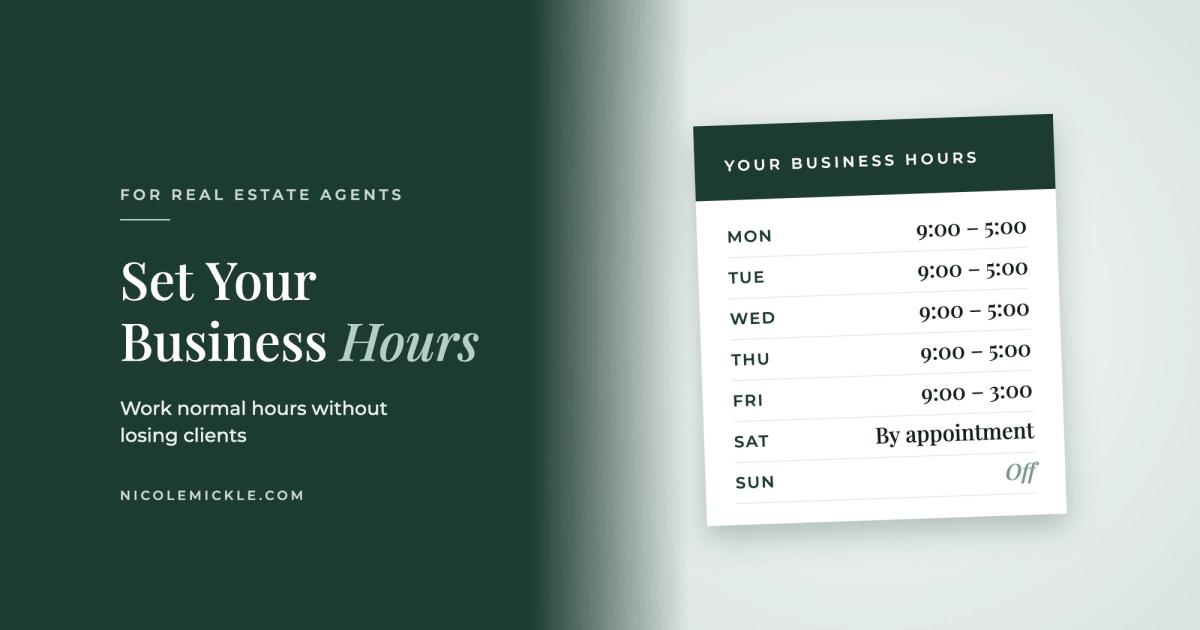
- What hours do you want to work? Decide this before your clients decide it for you.
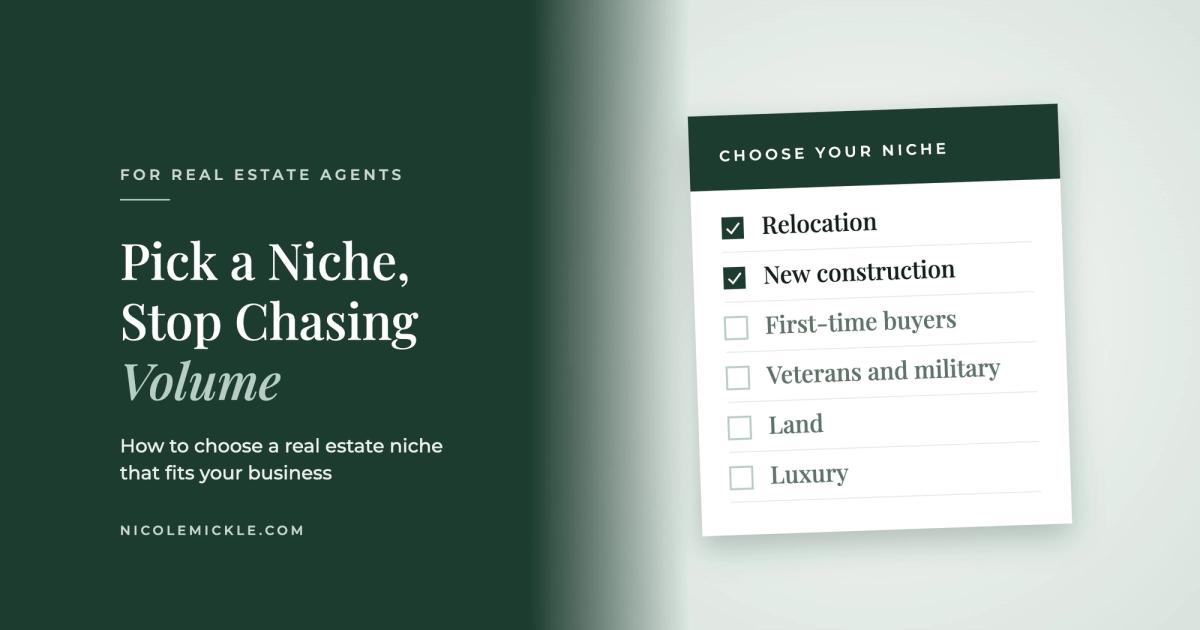
- Who do you want to serve? The more specific the answer, the easier your marketing gets.
My answers led me to relocation and new construction clients across Central Florida and beyond. That's why I describe myself as a Central Florida relocation and new construction specialist, not a high-volume agent. Those clients want someone who understands the market and has relationships within it, from builders to title companies. They don't need me to open doors on demand. They need me to help them make a big decision well.
| Factor | Volume model | Advisor model |
|---|---|---|
| Main goal | More transactions | Better-matched clients |
| Where leads come from | Calls, door knocking, paid leads | Website, email list, referrals, reputation |
| Your schedule | Set by client requests | Set by you, with clear expectations |
| What clients hire you for | Access and speed | Market knowledge and judgment |
| What keeps it running | Your constant effort | Systems that follow up for you |
Why positioning yourself as an advisor attracts different clients
Clients choose agents based on what the agent shows them. If everything you post is "just listed" and "just sold," you attract people who want someone to unlock a door. If what you share explains the market, the process, and the decisions behind a purchase, you attract people who want guidance.
Advisor clients tend to ask better questions, respect your time, and refer people like themselves. That's not a personality trait. It's a result of how you positioned yourself before they ever called. I go deeper on this in real estate agent vs. real estate advisor.
What systems make normal working hours possible?
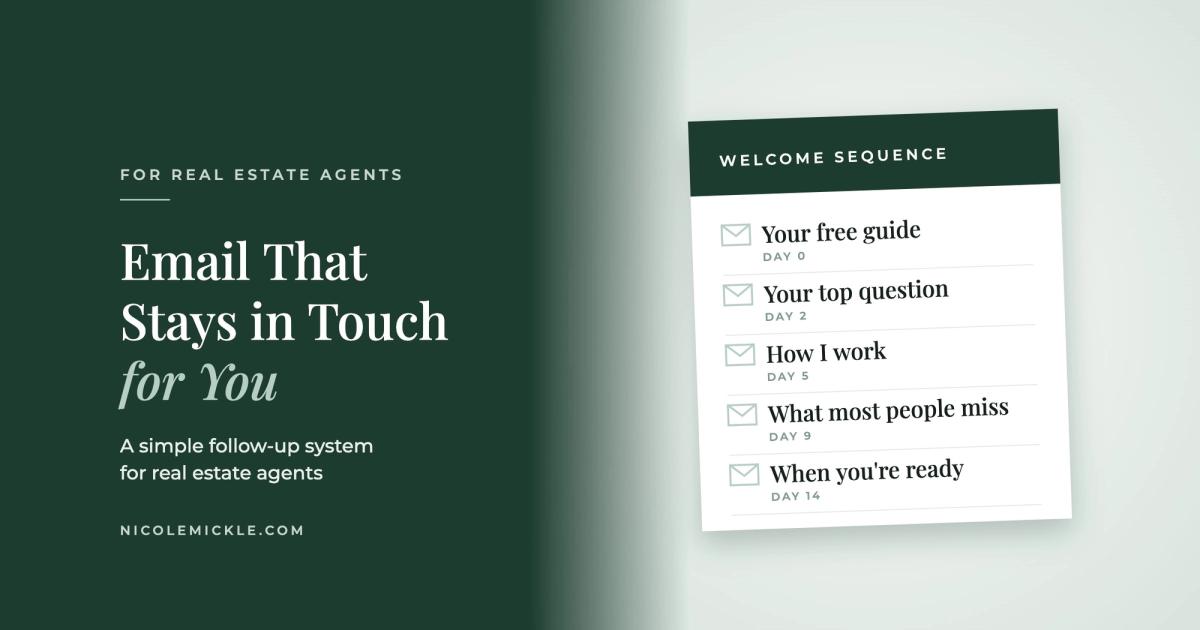
Normal hours come from systems that do the repetitive work for you. For most agents, that means a website that answers common questions, an email sequence that follows up automatically, a simple CRM or spreadsheet to track every client, and clear expectations about when you respond.
When I ran a closing company, I saw that the transactions that went smoothly weren't the ones with the most effort. They were the ones with the best process. A real estate business works the same way. Build the process once, and it keeps working while you're off the clock.
What most agents get wrong about growing their business
They try to grow by adding more of everything at once. More platforms, more leads, more clients, more hours. That growth is fragile. It depends on you keeping up a pace you can't sustain.
The agents I've watched build lasting businesses did the opposite. They picked a niche, built a few systems around it, and let their reputation do more of the work each year. Their business got easier as it grew, not harder.
How to start building the business you want
Start small. Write down your income goal, your ideal hours, and the client you want to serve. Then choose one system to build this month, whether that's a website page that answers your most common question, a welcome email for new leads, or a weekly time block for client updates. One system, done well, beats five half-built ones.
If you're still building your client base, start with my guides on how to get your first client as a real estate agent and how to get more seller leads.
Your next step
If Instagram is part of how you want clients to find you, start with my free swipe file. It has 30 first lines and 10 fill-in-the-blank captions, plus how to point every post toward your website and email list instead of your DMs.
Frequently Asked
Questions, answered
Can a real estate agent make a good living with fewer clients?
Yes. Income depends on price point, niche, and how much of each transaction you keep, not just the number of deals. Agents who specialize, serve clients well, and build referral relationships can reach their income goal with a smaller, more manageable client list.
How do I set boundaries with real estate clients without losing them?
Set expectations at the start. Tell clients when you respond, how you'll update them, and what counts as urgent. Most clients are comfortable with boundaries they know about up front. What frustrates them is not knowing when they'll hear from you.
What is the difference between a real estate agent and a real estate advisor?
Every licensed agent can help a client buy or sell. An advisor focuses on guidance: explaining the market, the process, and the tradeoffs so clients make better decisions. The license is the same. The positioning, the content you share, and the clients you attract are different.
Is real estate coaching worth it?
It depends on whether the coaching fits the business you want. Programs built around volume work for agents who want volume. If you want fewer clients and normal hours, look for guidance that starts with your goals instead of a standard quota.